

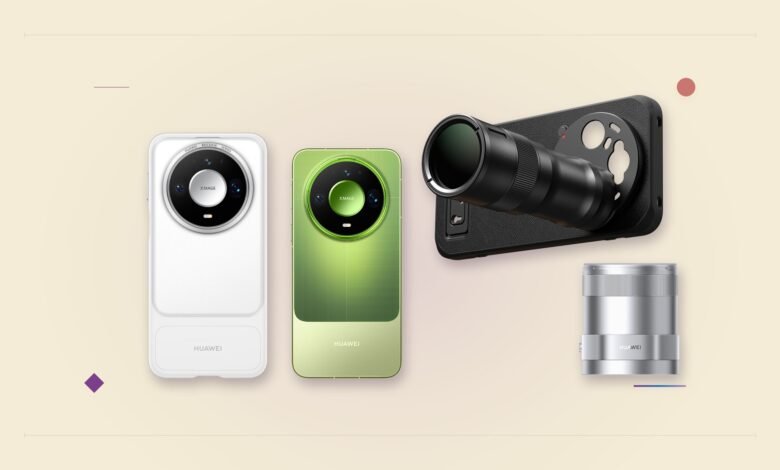
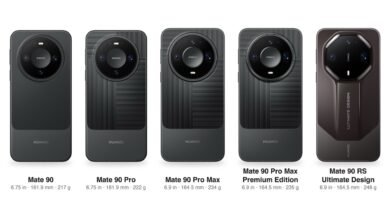
Huawei recently unveiled 5 phones as part of the Mate 90 Series. The Mate 90 Pro Max and the Mate 90 RS Ultimate Design are the top devices in the series. We’ve explained the differences already. Alongside the 5 new phones, Huawei and partners also launched a set of accessories including: a case you assemble from swappable parts, a camera that locks onto the back of the phone, and a zoom lens.
Not every accessory works with every phone however. What’s crazy even is that the Mate 90 Pro Max comes in two versions each with different accessories.
Two versions of the Mate 90 Pro Max
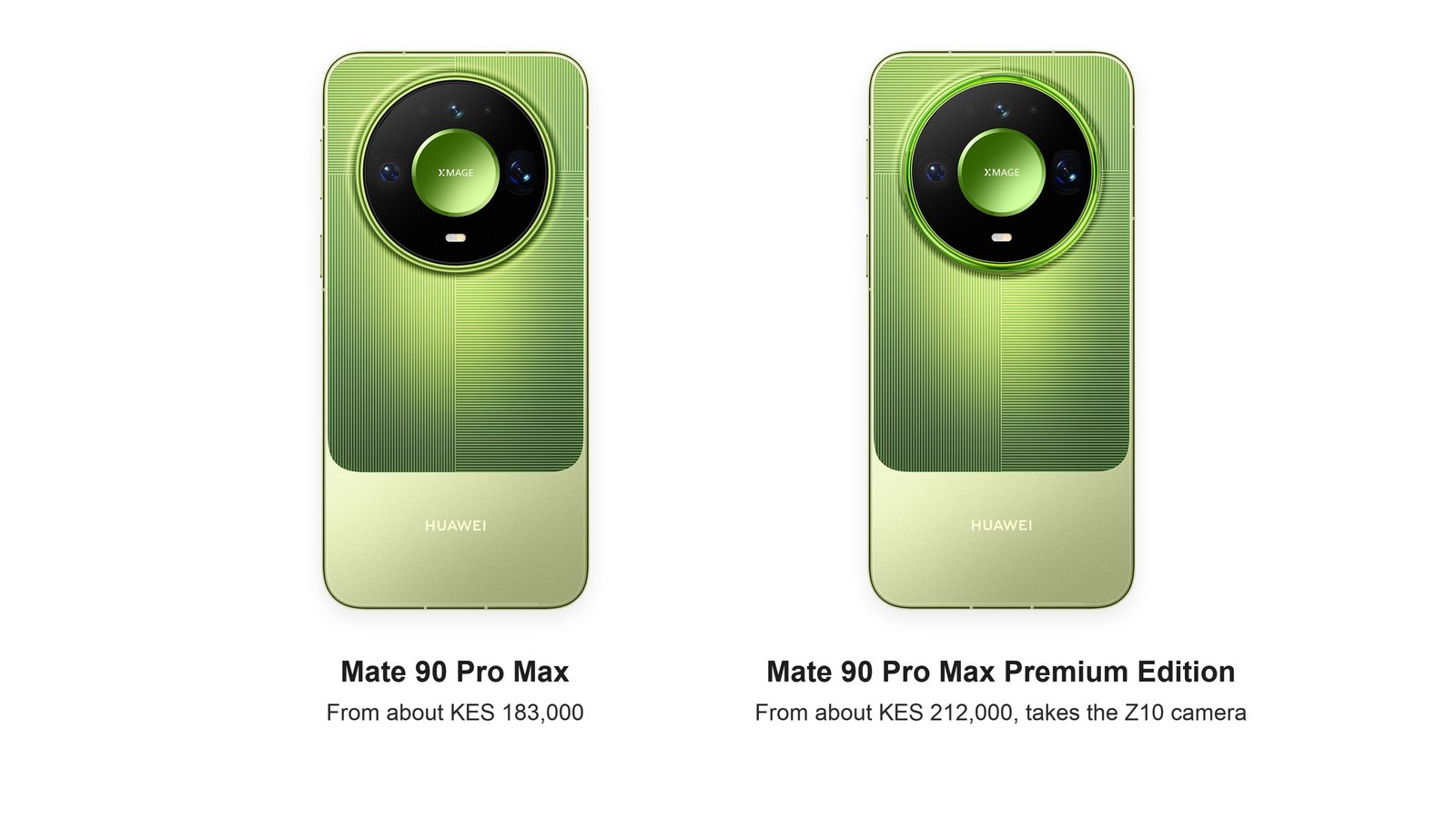
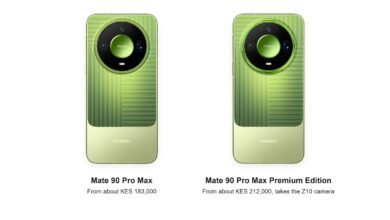
We listed every Mate 90 phone with its memory options and price. The standard Pro Max starts at about USD 1,410, or about KES 183,000. The Premium/Collectors Edition starts at about USD 1,640, or about KES 212,000.
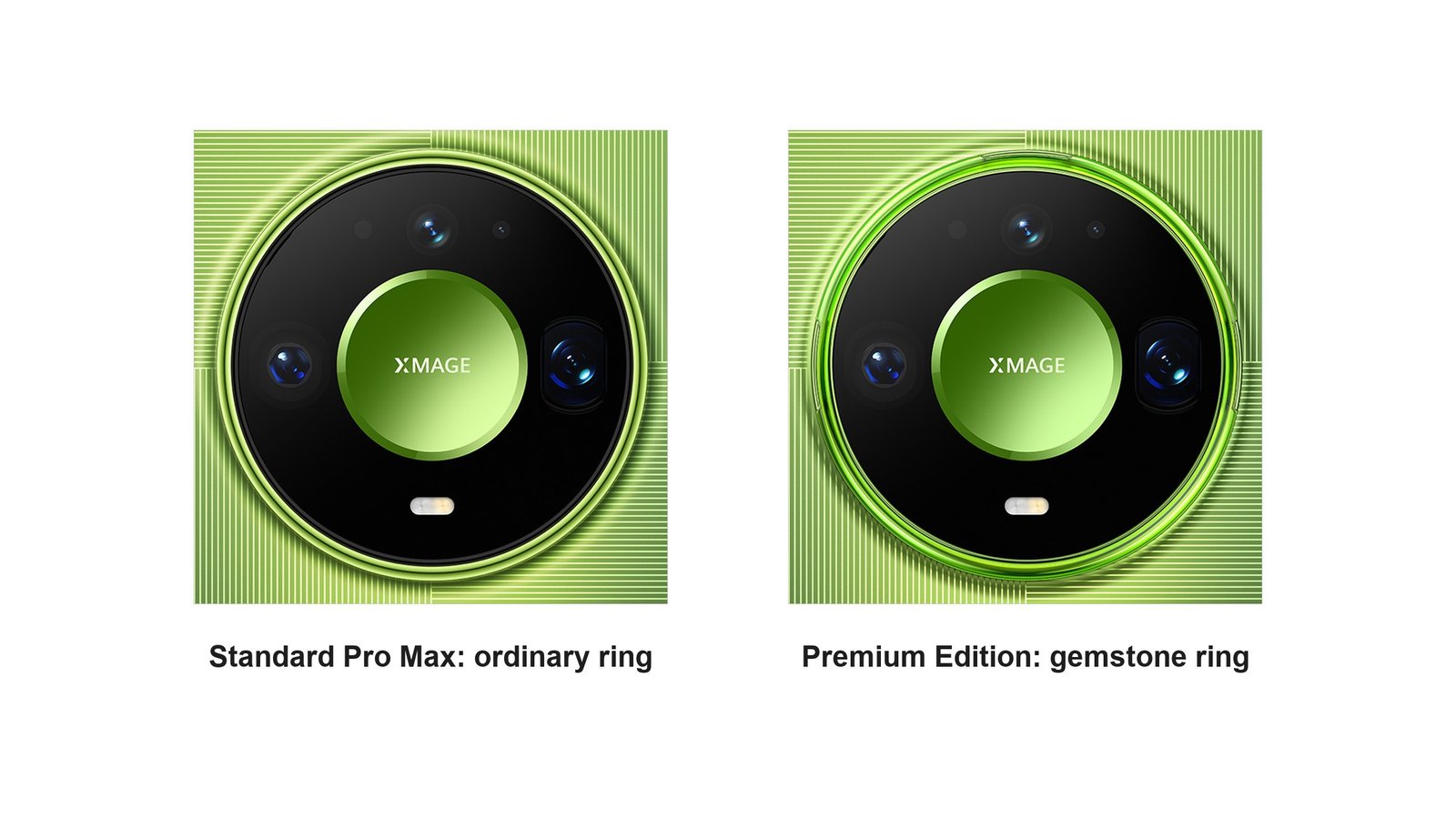
The two look almost the same. The difference is the round camera island on the back. On the Premium Edition it’s a floating ring made of what Huawei calls a yttrium crystal gemstone.

That ring is more than decoration. It carries the electrical contacts that Huawei’s Z10 camera connects to. The standard Pro Max has an ordinary ring with no contacts, so it can’t take use the Z10.
The Premium Edition also has a different screen glass. Huawei’s lab tests put it at 70% less reflection and 16 times the scratch resistance of ordinary glass. Both versions come in green, rose gold, crystal white and obsidian black.
Brickase, a case you build yourself
The Brickase is Huawei’s own case for the Mate 90 Pro Max. The name comes from its Chinese name, 积木壳, which means “building-block case”. Instead of one solid piece, it’s made of parts you can swap: the frame, the back plate, a logo card and a ring around the cameras.
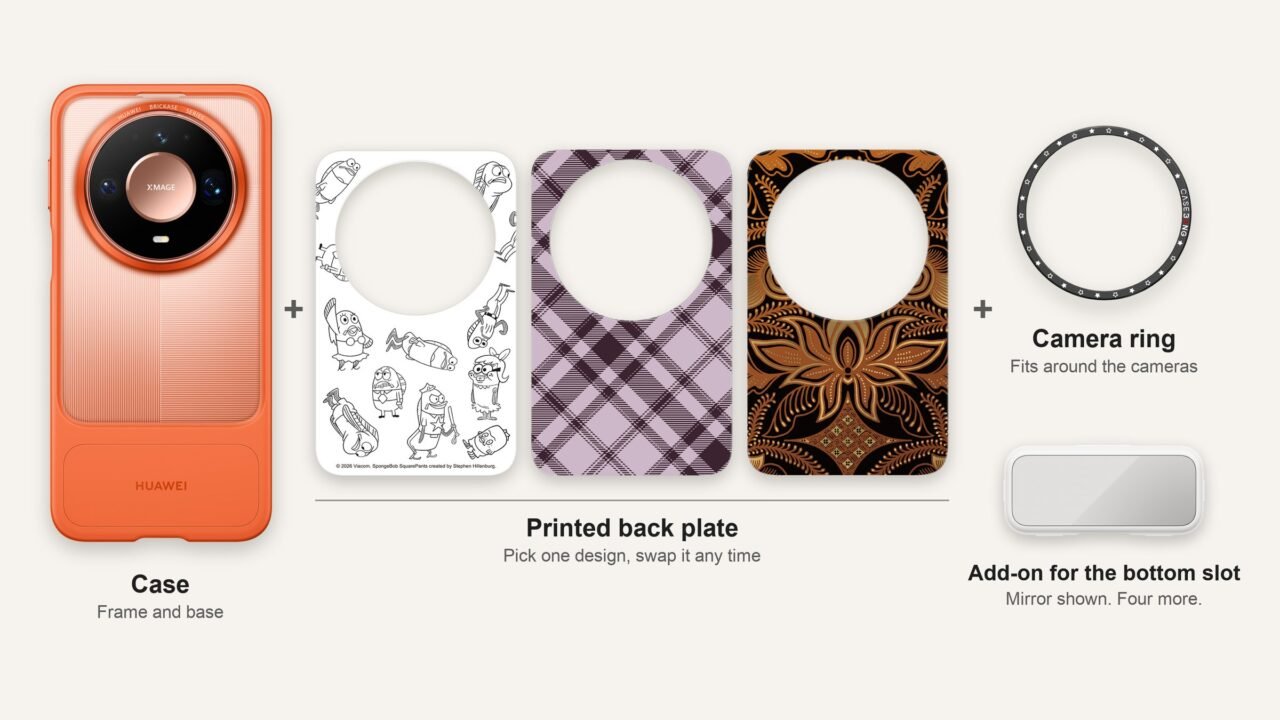
At the bottom of the case is a slot for a small add-on. You can choose between five different add-ons, which ship by 27th October:
- a lint roller,
- a fragrance insert,
- a mirror,
- a fill light for photos and
- a small storage box.
LEXON, a design brand, makes them, and Huawei’s online store lists them from about USD 9 for the mirror to about USD 18 for the fill light and the lint roller.
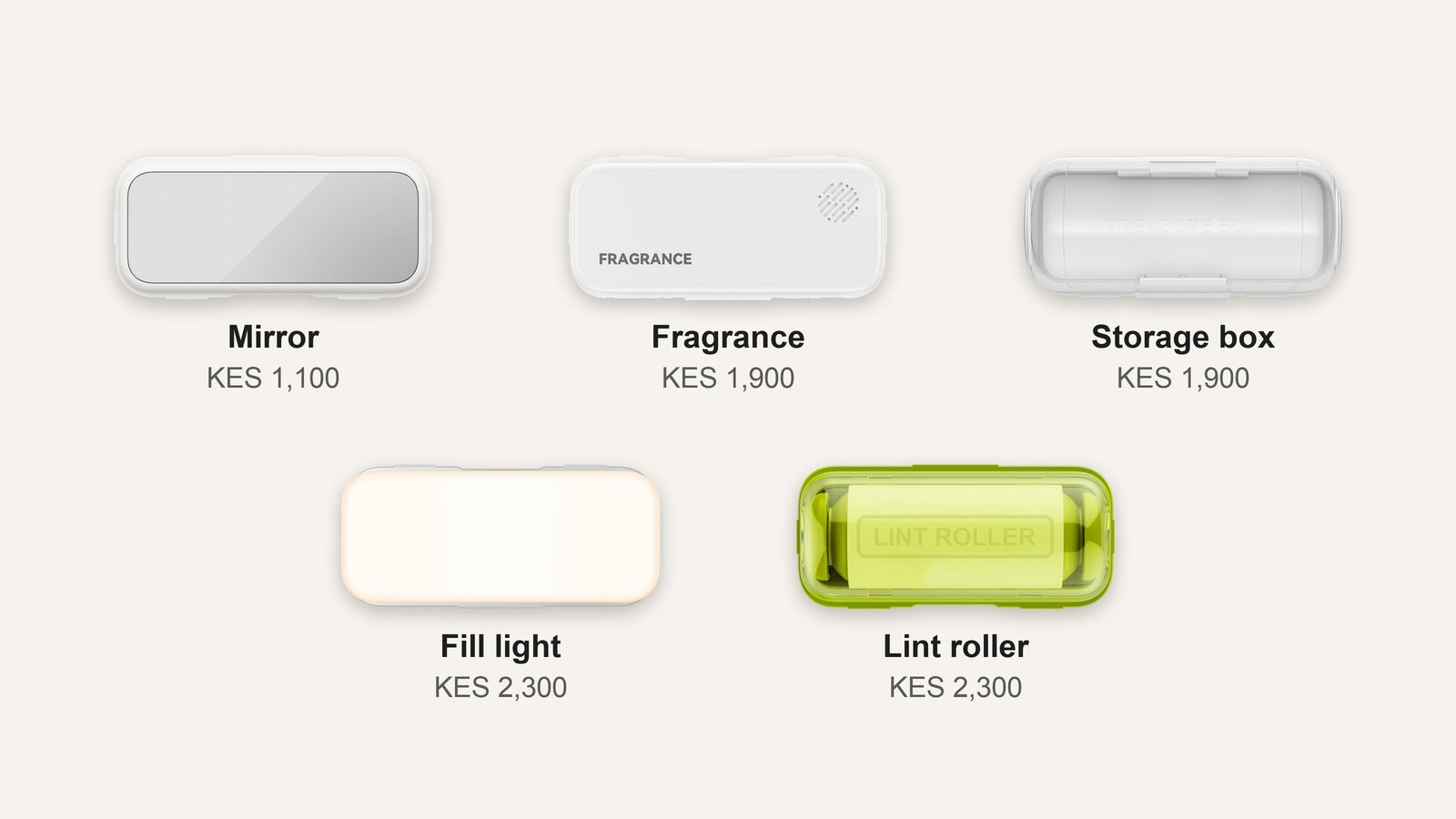
The case itself costs about USD 21. Huawei’s page says it fits both versions of the Mate 90 Pro Max. Printed back plates start at about USD 9 including designs with SpongeBob SquarePants and characters from the game Wuthering Waves. Huawei says the plates and add-ons don’t work on their own, so you must buy the case first.
The case has reinforced corners and cut-outs that leave the cameras uncovered. If you only want basic protection, a transparent case already comes in the box.
The Z10, a camera that attaches to the phone
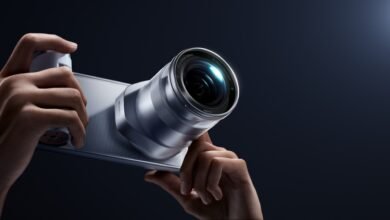
The XMAGE Z10 is the biggest accessory. It isn’t a lens. It’s a whole camera, with its own 1-inch sensor, the part that captures the picture, and a 24-240mm zoom lens that extends and retracts like one on a regular camera. We explained what it changes for the Mate 90 Pro Max’s cameras.
Huawei sells it for about USD 890. For now it works with only two phones: the Pro Max Premium Edition and the Mate 90 RS Ultimate Design, Huawei’s most expensive Mate 90.
The two phones have different camera rings, so the Z10 comes with one of two mount rings: H1 for the Premium Edition and H2 for the RS. A Z10 bought now can move to a later phone with a new ring, and Huawei is planning for more phones that will use it.
In the XMAGE Z10 box you get the camera, a lens hood, a lens cap and a pouch. It weighs about 346g, more than the 235g phone it attaches to, so together they come to about 581g.
You can also get many more extra stuff:
- Filter adapter. Photographers screw filters onto the front of a lens to cut glare or darken a bright sky. The Z10 takes 77mm filters, but only through an adapter. Ordinary 62mm filters would cover the small colour sensor on the front and tint the picture. SmallRig sells the adapter on Huawei’s online store for about USD 44.
- Tripod collar. A metal ring that lets you mount the camera on a tripod. It costs about USD 44.
- Crossbody strap. About USD 27.
- Control grip. Huawei lists it as a separate purchase but hasn’t given a price.
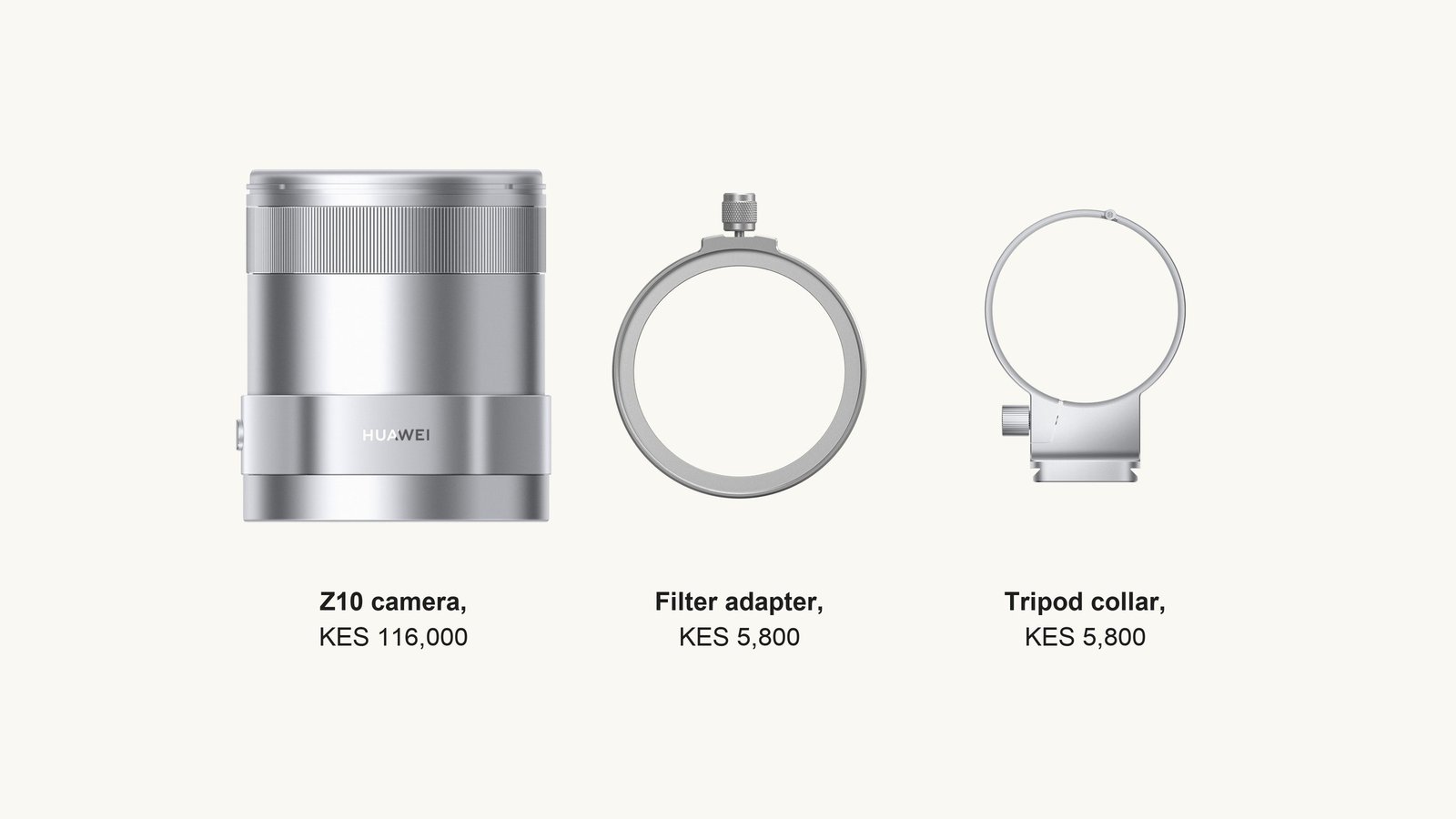
SmallRig’s zoom lens, for both versions
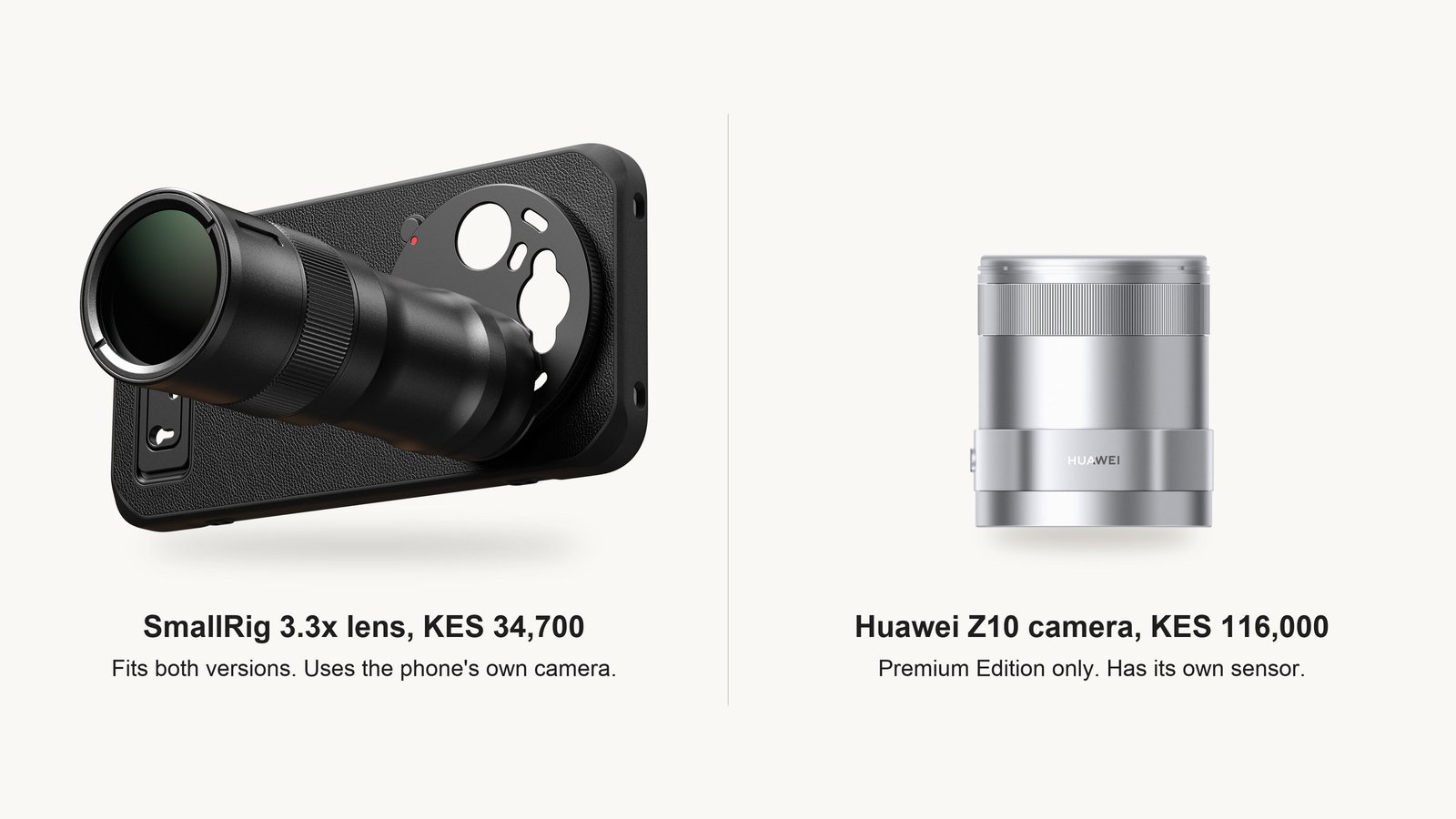
If you have the standard Pro Max and want more zoom, there’s a simpler option. SmallRig, a company that makes camera accessories, sells a 3.3x teleconverter kit for both Mate 90 Pro Max versions at about USD 270.
A teleconverter is an extra lens that sits in front of the phone’s own zoom camera and magnifies what it sees. Unlike the Z10, it has no sensor of its own, so the picture quality still depends on the phone’s camera. The kit comes with a SmallRig case that holds the lens in place, plus a fold-out stand.
Huawei’s page also lists the HUAWEI x DJI Osmo Pocket 4 as an optional extra. It’s a separate pocket video camera on a motorised stabiliser, in a blue co-branded finish, for about USD 450, or about KES 57,800.
What fits which phone, and what it costs
| Accessory | Standard Pro Max | Premium Edition | Price (CNY) | USD | KES |
|---|---|---|---|---|---|
| Brickase case | Fits | Fits | 139 | 21 | 2,700 |
| Printed back plate, from | Fits the Brickase | Fits the Brickase | 59 | 9 | 1,100 |
| LEXON Brickase add-on, from | Fits the Brickase | Fits the Brickase | 59 | 9 | 1,100 |
| SmallRig 3.3x teleconverter kit | Fits | Fits | 1,799 | 270 | 34,700 |
| Z10 camera | No | Yes | 5,999 | 890 | 116,000 |
| Z10 tripod collar | No | Yes | 299 | 44 | 5,800 |
| SmallRig Z10 filter adapter | No | Yes | 299 | 44 | 5,800 |
| Premium Edition 1TB and Z10 kit | n/a | Yes | 19,499 | 2,900 | 376,000 |
| HUAWEI x DJI Osmo Pocket 4 | Separate camera | Separate camera | 2,999 | 450 | 57,800 |
Which Pro Max to buy
The accessories decide it. The Brickase and the SmallRig lens fit the standard version, so if those are all you want, the cheaper phone will do.
The Z10 is different. A standard Pro Max can’t be upgraded to use it later, and the Premium Edition costs about KES 19,300 more than the standard 16GB model. So if you think you’ll ever want the Z10, buy the Premium Edition from the start. At 512GB, the phone and the camera together come to about USD 2,530, or about KES 328,000.




I just brought a P90 in the summer. Should have waited for the Mate 90 + z10 lens