

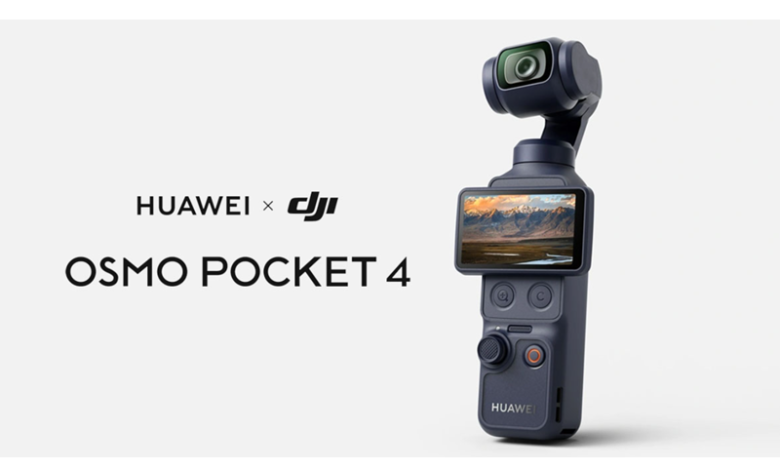
Huawei has announced a version of DJI’s Osmo Pocket 4 with its name printed on the body. Huawei says units will reach its stores in China gradually from 26th September 2026. The rollout covers Huawei flagship stores, its smart-living stores and its authorised select stores, where customers can try out the camera.
For creators, the obvious question is what buying this version changes. Li Xiaolong, the chief technology officer of Huawei’s device business, says it has more cross-device functions and is easier to use. He didn’t say what those functions are, and Huawei hasn’t listed them since.
The Huawei connection itself already works. Footage can move from the Pocket 4 to a compatible Huawei phone or tablet without going through DJI’s app. But that arrived before this launch. So if you already own a Pocket 4, check your firmware before you think about buying another one.
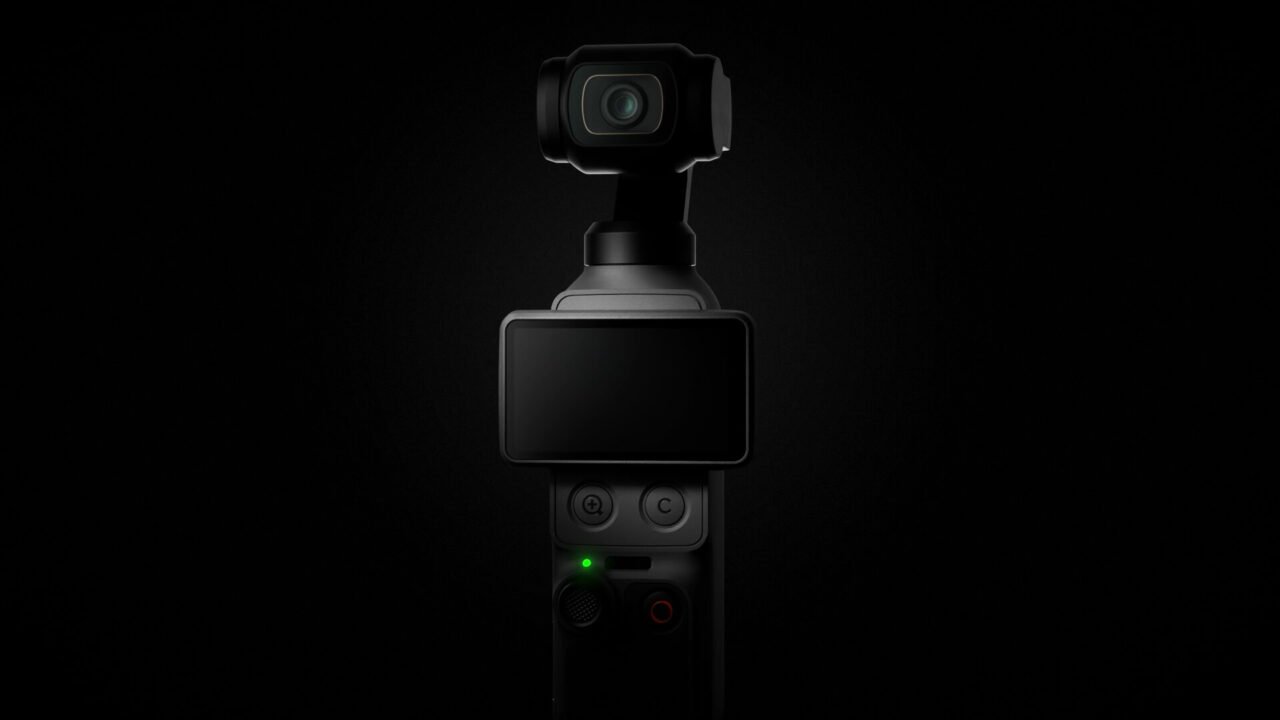
The Osmo Pocket 4 is a small, self-contained camera on a gimbal, a motorised mount that keeps the camera steady as you move. You can hold it while walking, or put it on a stand to film yourself. The camera records the footage, and a phone then handles the edit and the upload.

That handover is where Huawei’s integration helps. Huawei Share, Huawei’s system for sending files between devices, gives compatible phones and tablets a direct route to the camera’s footage. On the Pocket 4, you open the playback screen, select the clips, tap share and follow the connection prompts. The receiving device needs HarmonyOS 6.1 or later, and Huawei Share has to be set to Everyone the first time you share.
For a travel vlogger or someone covering an event, that means fewer steps before editing. Clips land in the phone or tablet’s own gallery without first opening DJI Mimo, the camera’s companion app. From there, you can open them in any editor that supports the footage.
We haven’t timed it, so we can’t say how quickly a big batch of 4K clips moves, or whether Huawei Share beats a cable. You also still need Mimo on the ordinary Pocket 4 to activate the camera and update its firmware.
Existing Pocket devices already have Huawei sharing
DJI’s firmware history dates direct transfer to Huawei devices to 9th June 2026, in version 01.02.07.05. That’s more than three months before Huawei put its logo on the camera.
Cloud uploading came before the branding too. DJI added Camera Cloud Service on 4th August 2026. It sends camera files to Google Drive, OneDrive or your own network storage, depending on your country and phone.
So when anyone says the Huawei edition can transfer files or upload footage, the follow-up question is what it does that an updated ordinary Pocket 4 can’t. Huawei hasn’t answered that. It may have more to show, but the transfer tools that exist today aren’t a reason to pick this edition over the ordinary one.
Huawei’s name sells in China
In China, the logo is the point. Huawei was the country’s biggest phone brand in the second quarter of 2026, with 23% of shipments to Apple’s 18%. HarmonyOS 6 and 7 run on more than 85 million devices, a figure Richard Yu, chairman of Huawei’s device business, gave on 7th September. The day after, we reported that HarmonyOS 7 reached 5 million devices within 24 hours. Their owners are the people walking into Huawei stores, and the Pocket 4 now sits on the same counter as their next phone.
Huawei has sold someone else’s product under its name before. Seres builds AITO cars, and Huawei sold them through its own stores. The AITO M9 SUV was China’s best-selling car above CNY 500,000, or about KES 9,655,000, for nine months in a row in 2024, on Seres’s own count. It delivered 150,000 in its first year.
DJI doesn’t need help selling cameras, though. It shipped more than a million Pocket 4s between the mid-April launch and the end of June. That quarter, 93% of the pocket gimbal cameras shipped worldwide were DJI’s, on IDC’s count.
What Huawei gives DJI is shelf space, and rivals are chasing the same thing. Insta360, whose Luna Ultra took close to 6% of pocket gimbal shipments in its first quarter, went into 44 Honor stores in July and plans 300 by the end of the year. On 24th July, it also went into more than 500 Apple authorised resellers in China. OPPO and vivo have confirmed their own gimbal cameras for this year. The Huawei edition puts DJI on the counters of China’s biggest phone brand before they arrive.
The timing helps too. The camera started reaching stores during the Mid-Autumn holiday, and China’s National Day break runs from 1st to 7th October. Our bet is that it sells well, mostly to people who already carry a Huawei phone. Watch how fast stores run out over that week.
Pocket 4 Camera
The Pocket 4’s specifications include a one-inch-type sensor and an f/2.0 lens. Its three-axis gimbal stabilises the camera physically. DJI also lists ActiveTrack 7.0 subject tracking, which lets the camera follow you without anyone operating it.
DJI claims 14 stops of dynamic range, a measure of how much detail the camera can hold in the darkest and brightest parts of the same shot. Its 10-bit D-Log mode records flatter footage that gives editors more room to adjust colour afterwards.
The headline 4K at 240 frames per second is for slow motion. Normal 4K recording tops out at 60fps. If you’re filming a product demo, the high-speed mode can stretch out a quick action. It’s a different tool from recording a talking-head video.
These are reasons to consider the Pocket 4 itself. Huawei’s announcement doesn’t mention a new sensor or any Huawei colour processing.
Compatibility matters more than the name on the body
HarmonyOS is Huawei’s operating system. As we explained in our coverage of its growth, Huawei’s software differs across markets. A Huawei logo on your phone doesn’t mean it meets DJI’s HarmonyOS 6.1 requirement. That matters if you’re importing the camera or using a Huawei phone bought outside China.
Don’t confuse this with Huawei’s separate tie-in for DJI’s Osmo Mobile phone gimbals. Huawei’s smart tracking documentation lists the Osmo Mobile 7, 7P, 8 and 8P, which hold a phone and film through its camera. The Pocket 4 has its own camera and isn’t on that list. That support tells you nothing about phone controls or livestreaming on the Pocket 4.
Huawei hasn’t published a price for its edition or said whether it will sell outside China. The ordinary Pocket 4 launched in China on 16th April 2026 at CNY 2,999, or about KES 58,000, for the standard kit and CNY 3,799, or about KES 73,000, for the Creator Combo. KES figures use 1 CNY to 19.31 KES, the rate on 27th September 2026.
If you use a compatible Huawei phone or tablet, sending footage straight from the camera saves you steps. If you already own a Pocket 4, you get that through a firmware update. Anyone weighing the Huawei edition should wait for Huawei’s list of extra functions and a price, then try it on their own phone in the store.





Join the discussion