
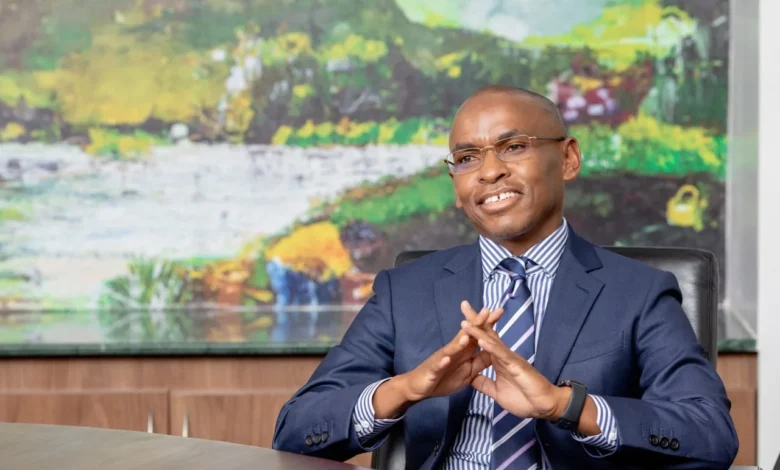
Safaricom, smartphones, and the scales of justice may sound like a quirky combination, but that’s exactly what day one of the 2025 Judges Colloquium in Mombasa served up. Aptly themed “Digital Transformation, Technology and the Law – Tech Justice,” the five-day gathering opened with an unlikely but timely headliner: Safaricom CEO Peter Ndegwa standing shoulder-to-shoulder with judges, regulators, and academics to make the case for why the future of justice in Kenya may well fit in the palm of your hand.
From the start, Ndegwa framed technology as an equalizer. He argued that Kenya’s transition to smartphone ubiquity would fundamentally reshape access to justice. “Today only about 50% of the population have smartphones,” he said, “and we expect that in the next five years, everyone in this country will have one.” The implication was clear: a modern justice system should prepare now for a fully digital society.


It’s not just rhetoric. Safaricom has partnered with the Kenya Judiciary Academy to build judges’ technical capacity in areas like mobile money systems and telecommunications—knowledge increasingly vital as disputes spill into fintech, AI, and cybercrime territory. As Ndegwa put it, technology should exist “to unlock possibilities, to connect, to empower, and to deliver justice.”
Chief Justice Martha Koome, who officially opened the colloquium, stressed that the judiciary itself is already on a digital path. She pointed to e-filing, the Integrated Case Management System, and even an AI-supported National Transcription Centre as signs of how the courts are modernizing. “The Judiciary itself is undergoing a profound digital shift,” she said, “anchored in the Social Transformation through Access to Justice (STAJ) blueprint’s commitment to leverage technology for efficiency and enhanced access to justice.” She also proudly noted that courts are clearing more cases than they receive, some topping 100% clearance rates, while cutting adjournments thanks to digital systems.


But Koome also sounded a note of caution. The rise of ICT has not come without costs. She warned of cyberbullying, harassment, and orchestrated online campaigns targeting judges. “Over the last year, we have witnessed a worrying trend,” she said, calling it a direct threat to judicial independence. The UN, she added, has taken note, with the Special Rapporteur on the Independence of Judges and Lawyers planning a fact-finding mission to Kenya.
Deputy Chief Justice Philomena Mwilu urged her colleagues to embrace change without losing sight of their core mandate. “As we adapt, evolve and innovate to harness opportunities and address challenges,” she reflected, “our anchor in the swell, our ‘Prospero’s magic’ in the tempest, is the oath that we all swore.”

Justice Smokin Wanjala of the Supreme Court described the colloquium’s theme as deliberate and twofold: judges need to understand both the jurisprudential implications of emerging technologies and the operational transformation happening within their own courts. “On the jurisprudential front, we are witnessing rapid technological advances that judges must keep abreast of,” he said. “On the operational front, the judiciary is undergoing profound transformation, making it imperative for us to understand how these developments will shape our work.”

For Chief Registrar Winfridah Mokaya, Kenya’s progress is already drawing global attention. “It is because of your leadership that the Kenya Judiciary has become a model among world nations as a driver of efficiency by harnessing technology in its processes,” she told the judges, adding that in just two years, seven international delegations have visited to study the Kenyan model.
The Communications Authority of Kenya, represented by Director-General David Mugonyi, provided some striking numbers: 42.5 million smartphone users and 37.5 million feature phone users. But Mugonyi argued this isn’t only about connectivity. “It’s about building a free and just digital Kenya. As everyone in this room appreciates, a society cannot flourish without justice, meaning we cannot achieve digital transformation without a modern judiciary.”
@KJA_Kenya @CA_Kenya

The Law Society of Kenya also weighed in, with Advocate Tom Kopere announcing a new Ethics and Integrity Committee to tackle unverified social media attacks against judges. “This will ensure that issues raised are verified and escalated to the JSC where necessary,” he said, “as opposed to simply throwing mud on social media without evidence.”
For our readers, none of this feels out of the blue. Earlier this week, the CA at the Devolution Conference in Homa Bay County highlighted how Kenya’s digital future risks being held hostage by county bureaucracy. We’ve also reported on the judiciary’s growing interest in AI, from transcriptions to contemplating full courtroom integration. What Mombasa’s colloquium confirmed is that these conversations are no longer fringe. They are mainstream. Safaricom’s presence and active partnership only underline that the future of law is no longer just about wigs, robes, and courtrooms. It’s about code, connectivity, and yes, the humble smartphone.
Day one closed with both optimism and caution. The optimism that digital justice can bring efficiency, inclusivity, and transparency. The caution that online intimidation, technical illiteracy, or bureaucratic chokeholds could erode those gains. As Ndegwa challenged the judges, the real test isn’t in setting up the tech but ensuring it actually works for ordinary Kenyans, from Nairobi’s high courts to a remote citizen dialing into justice on a handset.
Justice, it seems, is getting a network upgrade. The real question is: will Kenya’s legal system keep its signal strong enough to carry everyone along?









Join the discussion