

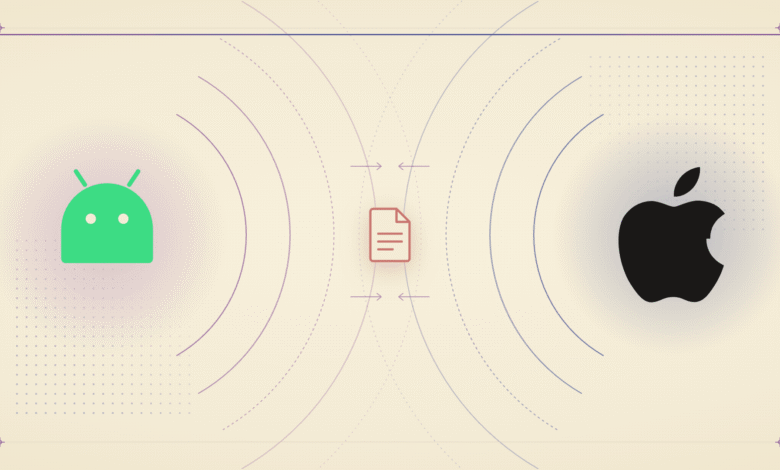
For years, AirDrop was the single biggest reason iPhone users stayed in their group chat bubble. If you wanted to send a 200MB video to a friend across the room, the iPhone-to-iPhone crowd just did it. Everyone else opened WhatsApp, watched the quality drop, and waited on a network.
That gap is closing. At The Android Show: I/O Edition on Tuesday, ahead of Google I/O next week, Google confirmed that AirDrop compatibility through Quick Share is expanding to Oppo, OnePlus, Vivo, Xiaomi, Honor and more Samsung Galaxy phones later this year.
Google also turned on a new QR code based sharing option in Quick Share starting May 12. That one works on every Android phone, regardless of brand or chipset.
How we got here
This is the third chapter in a story that has moved unusually quickly.

Chapter one was November 2025, when Google switched on AirDrop compatibility for the Pixel 10 series. Google reverse-engineered Apple’s protocol with no public partnership from Apple, and made Quick Share able to speak AirDrop’s language. We covered the original Pixel 10 launch of AirDrop support at the time.
Chapter two was March and April 2026, when Samsung joined in. The Galaxy S26 series got the feature first, then Samsung extended it to ten more Galaxy phones on the One UI 8.5 beta. As we already explained when Samsung confirmed its compatible Galaxy devices, the list runs from the Galaxy Z Flip 6 all the way up to the S26 Ultra. The S25 series moved from beta to stable in the weeks since.
In late April, Oppo’s Find X9 Ultra and Vivo’s X300 Ultra quietly picked up the feature, becoming the first non-Pixel and non-Samsung phones to support it.
Chapter three is this week’s announcement, which commits the rest of the major Android brands to the same standard.
What is actually new this week
Three things were confirmed.
First, AirDrop-to-Quick-Share support is officially expanding to Oppo, OnePlus, Vivo, Xiaomi and Honor phones later in 2026. The specific devices named so far are flagship-class: the Oppo Find X8 series, OnePlus 15, Honor Magic V6, Honor Magic 8 Pro, and additional Samsung Galaxy devices including the upcoming Z TriFold.
Second, starting May 12, any Android phone can share files to an iPhone through a QR code generated inside Quick Share. The Android user generates the code, the iPhone user scans it with the standard Camera app, and the file moves through Google’s cloud rather than peer-to-peer. It is slower than native AirDrop and needs internet on both sides, but it works on phones that are not on any compatibility list. Google says the QR option will be fully rolled out to all Android phones within a month. One privacy note worth knowing: anyone holding the QR code can download the file, so only share it with people you trust.
Third, Quick Share is opening up to third-party apps. WhatsApp is the first named partner. That should let you push a file from WhatsApp directly into Quick Share without leaving the app, including to iPhones.
The chipset catch
Here is the part most readers will want to understand. AirDrop over Quick Share is not just a software feature. It needs hardware support.
Apple’s AirDrop is built on Apple Wireless Direct Link (AWDL), a peer-to-peer protocol that runs over Wi-Fi. Google reverse-engineered it using a security-hardened version written in Rust. To make it work, the Android phone needs a chipset that supports the right Wi-Fi networking primitives at a low level. That means flagship Snapdragon and Exynos chips for now, and not the mid-range Mediatek or entry-level Snapdragon chips that power most affordable phones.
In practical terms, this is why the named devices are all flagships. The Galaxy S25 and S26 series, the Pixel 9 and 10, the Z Fold and Z Flip lines, the Oppo Find X series, OnePlus 15, Vivo X300 Ultra. Not the Galaxy A series, not Redmi, not Oppo A series, not Realme C series, not Tecno or Infinix.
Why this matters for Kenyan users
In Kenya, mixed-device households and offices are the norm. The Android-iPhone split runs through families, WhatsApp groups, churches and small businesses. Moving a single high-resolution photo or a recorded meeting clip has always pushed people back to WhatsApp, where compression eats quality, or to cloud links that need data bundles.
Quick Share to AirDrop solves that with no internet, no third-party app, and no setup beyond the iPhone user toggling AirDrop on. The problem is most Kenyan buyers will not benefit directly. The phones that dominate this market — Tecno, Infinix, Itel, Xiaomi Redmi, Samsung Galaxy A series, Oppo A series — are not on the compatibility list, and the chipset gap means many of them may never be.
That is where the QR code option matters. It is the only part of Tuesday’s announcement that genuinely works on every Android phone in Kenya, whether you spent KES 12,000 or KES 200,000. It is cloud-based and slower, but it works.
If you have a flagship Samsung, Pixel, Oppo, OnePlus or Vivo, you are in line for the proper peer-to-peer experience over the next few months. Everyone else gets the QR code, which is still better than what we had before.
What to watch next
Google has not given a precise date beyond “later this year” for the wider flagship rollout. It has not said whether mid-range phones from the named brands will ever get native support. Apple has not officially signed off on the AirDrop side of any of this, which means the whole arrangement still rests on Google’s reverse engineering.
Apple did, however, formally cooperate with Google on the separate iPhone-to-Android migration tool announced at the same event. That side comes from iOS 26.3, which Apple released in February 2026 partly under pressure from the EU Digital Markets Act. It is a different story, and worth one of its own.
For now, the QR code option is the part you can actually use today. The flagship rollout is the part to watch over the rest of 2026.
If your phone is on the list, AirDrop is no longer something only your iPhone friends get to enjoy. If it is not on the list, the QR code is your bridge. Either way, the wait for cross-platform sharing in Kenya is finally measured in months rather than years.


Join the discussion