

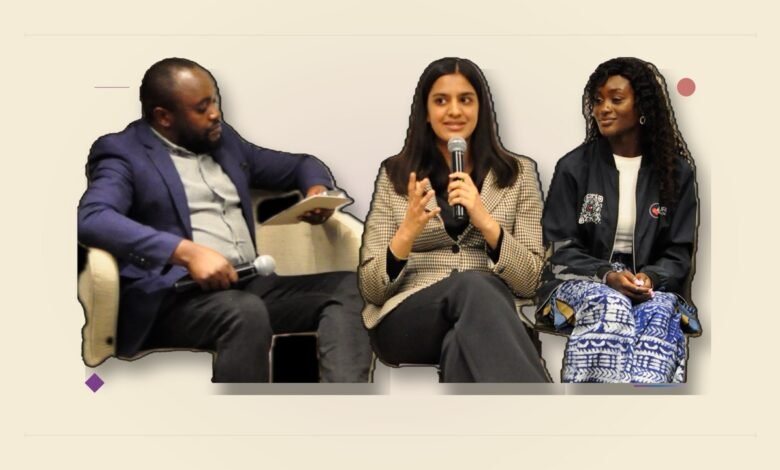
A high-level tech forum in Nairobi landed on a single uncomfortable point about Africa and artificial intelligence. The continent is adopting AI quickly. It is not yet building or owning much of it. And unless ethics, infrastructure, and local distribution catch up with the adoption curve, the gap will widen.
The forum was hosted by Aashna Jain, the 17-year-old founder of AITHOS, a community focused on responsible AI, and co-hosted by Marevak Consulting. It pulled together speakers from the University of Nairobi, a Pan-African venture capital firm, a Kenyan health tech startup, and a Middle East and Africa consultancy. The theme was “Ethics in AI”, but the actual conversation was broader than that. It was about who gets to shape the next decade of African technology, and on what terms.
From adoption to ownership
The keynote came from Samuel Mbai, the chief ICT officer at the University of Nairobi. His argument was that Africa is at a turning point. “AI is shifting from adoption to ownership,” he said. “With potential contribution of over US$15.7 trillion to the global economy, Africa must invest in infrastructure, talent, and policy to compete.”
That US$15.7 trillion figure comes from PwC’s 2017 Sizing the Prize report, which projected AI’s contribution to global GDP by 2030. North America and China are forecast to capture nearly 70 per cent of that value. Africa, by current trajectories, captures very little of it. Mbai’s framing was that data is now a strategic resource on the same level as oil or land, and that policy and infrastructure decisions made in the next few years will determine whether the continent owns its piece of the AI economy or rents it from elsewhere.

That tension is not abstract for Kenya. We already covered how the country’s push for local AI data centres has run into hard questions about water and electricity supply. The National AI Strategy 2025–2030 sets out an ambition. The forum was essentially a stress test of how realistic that ambition is.
Localisation and the startup angle
Art Chupeau, managing partner at Baobab Network and founder of Lissom Advisory, was blunt about where the real opportunity sits. “Africa’s biggest AI opportunity is not building hype-driven technology but using AI to solve real operational problems in underserved markets,” he said. “The real advantage will come from combining AI with strong local distribution, proprietary data, and a deep understanding of fragmented African markets.”
This matters because most African AI startups are not competing with OpenAI on model size. They are competing on whether they can plug AI into a logistics workflow, a credit decision, or a clinic queue that nobody else understands well enough to automate. Proprietary data is the moat. Local distribution is the moat. Foreign models without those two things tend to fail quietly in African markets.
Ethics, healthcare, and the trust gap
The healthcare contribution came from Daisy Isiaho, co-founder and Chief Product Officer at Zuri Health. The Nairobi-based startup runs a virtual hospital and digital healthcare platform, and we have followed its work, including its partnership with Pharmaplus on chronic illness care. Her assessment of why AI in African healthcare is hard to scale was direct.
“Scaling AI-driven healthcare in Africa is constrained less by technology and more by fragmented policy frameworks, limited infrastructure, and persistent trust gaps among patients and providers,” she said.
Each of those three constraints is doing real work in that sentence. Fragmented policy means an AI diagnostic tool legal in Kenya may not be deployable in Tanzania or Nigeria without starting the regulatory process from scratch. Limited infrastructure means the connectivity, devices, and data systems needed to run continuous AI services are uneven. Trust gaps mean that even when a tool works, patients and clinicians have to be convinced that an algorithm trained mostly on non-African data will not get their case wrong.
Aashna Jain made the ethics case from the youth side. “Africa’s AI future will be shaped by youth, but ethics must be embedded from the start. We must teach responsible use to build fair, inclusive and accountable systems.” Jain runs the AITHOS podcast, which interviews researchers and practitioners on responsible AI.
Maréva Koulamallah, founder and CEO of Marevak Consulting, made the governance point that closed the loop. “Young people are ready to shape Africa’s AI future, but we must build multi-layered collaboration across sectors and also gatekeep ownership of the technologies we create.”
What the forum was actually saying
Strip away the conference language and the speakers were making one coordinated argument. Africa cannot let its AI moment be defined by how fast it adopts tools built elsewhere. The infrastructure has to be local enough to be reliable. The data has to be African enough to be accurate. The startups have to be close enough to the problem to actually solve it. And the ethics work has to start now, not after the systems are already deployed and the harms are already showing up.
For Kenya, that lines up with what is already on paper in the National AI Strategy. The hard part is execution. The Nairobi forum was a reminder that adoption is the easy bit, and ownership is the work.








Join the discussion