
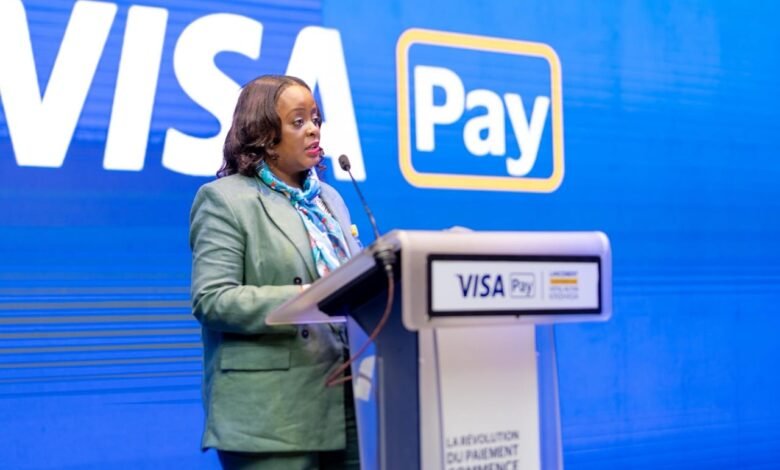
Visa is giving more banks, mobile money operators and fintechs across Africa a faster way to launch digital payments. It is doing this by handing them a software kit that plugs its Visa Pay product straight into apps they already run.
The company announced the expansion in early July. The named markets are Ghana, the Democratic Republic of Congo, Sudan, Comoros, Mauritius, Zambia, Zimbabwe, Botswana, Tanzania, Sierra Leone and Afghanistan. That is ten African countries plus Afghanistan, which Visa groups under Central Asia. Visa calls this list a starting point rather than a complete roster, so more markets could be added.
Kenya is not on it. That absence is the most interesting part of the announcement for anyone reading from Nairobi, and there is a simple reason for it, which we get to below.
What Visa Pay actually is
Visa Pay is not a card in your wallet or an app most people will search for by name. It is a set of payment tools that a bank, telco or fintech can switch on inside its own app.

Once switched on, it lets a customer do several things from one place. They can pay online, send money to another person, receive money, and get a virtual card. A virtual card is a normal Visa card that exists only as numbers on a screen, with a 16-digit number, an expiry date and a security code, but no plastic. You use it the same way you would use a physical card at an online checkout.
The point Visa keeps stressing is interoperability. Visa Pay is meant to move money across different banks, fintechs and mobile networks rather than trapping it inside one wallet. It is also built to serve people who have a bank account and people who do not, which matters in markets where cash still dominates and formal banking is thin.
Visa Pay’s first African market was the Democratic Republic of Congo, which went live in September 2025. As we covered when Visa Pay launched in the DRC, it arrived both as a standalone app and as something banks could embed directly, with near real-time transfers in Congolese francs and US dollars, plus cash-in and cash-out at bank branches. Globally, Visa Pay is already live in Hong Kong, South Korea, Taiwan and Vietnam.
The part that is new: the SDK
The fresh piece in this announcement is the delivery method. Visa is now shipping Visa Pay as a software development kit, or SDK.
An SDK is a bundle of pre-built code and tools that a developer drops into an existing app instead of building everything from scratch. Think of it as a ready-made engine rather than a pile of parts. For a mid-sized bank in Lusaka or a fintech in Freetown, the difference is time and cost.
Visa says the kit already includes the hard, slow pieces of a payments launch. That means the processing that runs a card behind the scenes, tokenisation (which replaces real card numbers with disposable ones to cut fraud), and the security and compliance checks Visa requires. Bundling these means an issuer can go from decision to launch in a market where weak infrastructure would normally slow the whole thing down.
Visa also says a Tap to Pay feature is coming. That would let people pay by tapping their phone on a contactless terminal, the way many Kenyans already tap cards or phones at supermarket tills.
Who is signing up, and for what
The partners span banks, mobile money operators, fintechs and licensed payment providers. The use cases go well beyond online shopping.
Tanzania Commercial Bank says it will use Visa Pay to grow digital adoption among customers and merchants and widen where its customers can pay. In Mauritius, fintech EZ Dash points to tokenisation and digital credential management as the draw. In Afghanistan, HesabPay says it plans to issue up to one million Visa cards through the product, and that Visa Pay let it scale without stitching together several separate vendors for card management, processing and online-payment security.
That last group of use cases is easy to miss but important. Visa Pay is also being pitched for remittances and for humanitarian disbursements, meaning aid agencies and governments paying money directly to people in hard, cash-scarce environments. Sudan and Afghanistan appearing on the list is not an accident. These are markets where moving money safely is genuinely difficult, and a digital card that works on a global network can be more reliable than cash.
So why not Kenya?
Kenya is missing from this list because it already has its own version of the same idea, built through a different partner.
Since 2022, Safaricom and Visa have run the M-Pesa GlobalPay virtual Visa card, which lets M-Pesa users pay international sites like Netflix, Amazon and AliExpress straight from their wallet. We explained how to set up and use that virtual card when it launched. It has grown into a mainstream product. In the financial year to March 2026, active users reached 316,500, up 62% in a year, with KES 12 billion moved across 8.5 million transactions, according to Safaricom’s results.
Visa is also working on Kenya’s payment plumbing from a different direction. In April, as we reported when Kenswitch and Visa signed their framework agreement, the two moved to modernise the domestic systems that clear and settle transactions between Kenyan banks. That is deeper, less visible work than launching a consumer feature.
In short, Kenya is not being skipped. Visa is already present here through M-Pesa and through core infrastructure. The new SDK push is aimed at markets that do not yet have that kind of Visa-plus-mobile-money link in place.
The bigger picture
This is Visa competing for Africa’s next wave of digital payments users, most of whom will come online through a phone and a wallet rather than a bank branch. Its main rival, Mastercard, has been building its own footprint across the continent, and mobile money networks like M-Pesa remain the dominant force in several markets. Visa’s strategy is to sit inside those networks rather than fight them, which is what the SDK model is designed to do.
For people in the 11 named markets, the change will mostly show up quietly, as a new card or payment option inside a banking or wallet app they already have. For Kenya, the more useful question is not whether a product called Visa Pay launches here. It is whether Visa’s existing work, the M-Pesa card and the Kenswitch infrastructure deal, makes everyday online and cross-border payments cheaper and faster. That is the outcome worth tracking.








Join the discussion