

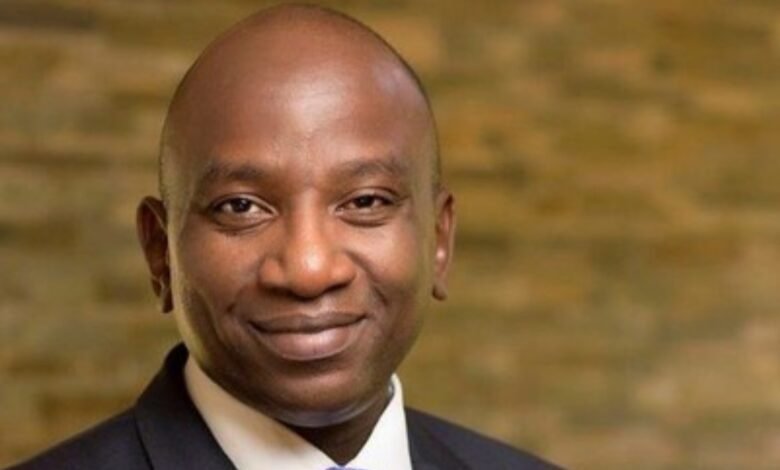
Stanbic Bank Kenya has named Michael Mutiga as its next chief executive officer. Mutiga is immediately the former Chief Business Development and Strategy Officer at Safaricom, the country’s biggest telecoms operator and the company behind M-PESA. He takes over at Stanbic on 1 August 2026, once the Central Bank of Kenya approves the appointment.
That approval step is routine. In Kenya, the Banking Act requires the regulator to vet anyone appointed to run a bank, so the “subject to regulatory approval” note on the announcement is standard practice rather than a sign of any hitch.
Mutiga replaces Abraham Ongenge, who has led the bank in an acting capacity since March 2026. Ongenge now returns to his substantive role as Head of Personal and Private Banking.
Who is Michael Mutiga?
Despite the Safaricom job on his most recent business card, Mutiga is a career banker. He spent about 15 years at Citibank and left as Managing Director and Head of Corporate Finance for Sub-Saharan Africa, a position he held from 2019. Before that he worked at Barclays, later rebranded Absa, where he rose from a management associate to regional coverage head for East Africa in the investment banking division. He joined Safaricom in May 2022 to run strategic partnerships, mergers and acquisitions, funding and asset optimisation.

At Safaricom he is credited with arranging a multi-billion-shilling sustainability-linked loan in 2023. The operator described it as the largest loan of its kind in East Africa at the time and the first to be denominated in Kenya shillings.
Mutiga trained as a lawyer. He holds a Bachelor of Laws from the University of Nairobi and a Master of Laws from Temple University in the United States, and is an advocate and a certified public secretary. Stanbic says he has been named Corporate Banker of the Year five times, although it did not name the awarding bodies or the years.
Why hire a banker who spent four years at a telco?
In Kenya, the line between a bank and a phone company has almost disappeared. M-PESA began as a way to send money by text message. It now lends, holds savings, sells insurance, and lets people buy into money market funds and government securities. We recently unpacked how M-PESA is pushing into savings and investing through its Ziidi platform, ground that used to belong to banks and asset managers. M-PESA already accounts for about 44% of Safaricom’s service revenue in Kenya, a measure of how large that business has grown.
Banks have answered by pouring money into their own apps. Stanbic is a good example. We covered its app overhaul that lets customers open accounts, invest in money market funds in shillings or dollars, and pay for Treasury bills and bonds without setting foot in a branch. Absa Kenya, another large lender, has said it will spend up to KES 3 billion, about $23.2 million, a year on technology.
Hiring someone who has worked both sides, structuring deals as an investment banker and building digital finance products at a telco, fits a wider pattern. Kenyan banks are increasingly recruiting leaders from outside traditional banking, because the competition now comes from fintechs and mobile money as much as from other banks.
The leadership reshuffle behind the move
Stanbic Bank Kenya is the local banking arm of Standard Bank Group, the South African lender that is Africa’s largest bank by assets. The Kenyan CEO seat opened when Joshua Oigara, who had led the bank since December 2022, was promoted. We reported when Oigara was handed Standard Bank’s wider East Africa role. He has since also taken charge of the listed parent company, Stanbic Holdings Plc. Ongenge held the fort in the meantime.
It has been a restless year at the top of Kenyan banking. In June, Abdi Mohamed left as chief executive of Absa Bank Kenya after three years and joined rival I&M Group to run its Kenyan bank. Mutiga’s appointment is the latest in that run of changes.
What to watch
Two things will decide how this plays out. The first is the Central Bank of Kenya’s approval, which is expected but not guaranteed, and which is why Mutiga does not formally start until August. The second is what he does once he is in the chair. Stanbic has spent the past year adding investing and trade tools to its app and leaning into cross-border and Africa-China trade finance. Bringing in an executive whose recent work was building financial products at M-PESA, and whose earlier career was in corporate and investment banking, points to where the bank wants to compete next. Whether that shows up in faster growth is what customers, shareholders and the regulator will be watching over the next couple of years.






Join the discussion