
Update 2: Anne has been appointed as VP at Visa
Update: Bonke Michael named acting MD
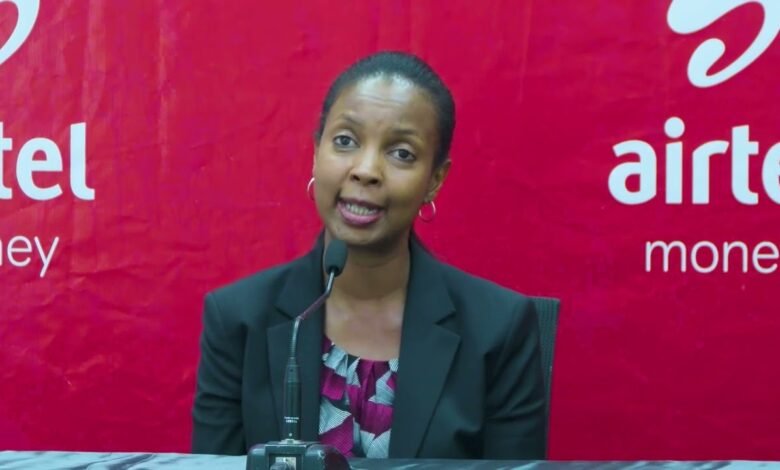
Anne Kinuthia-Otieno has left Airtel Money Kenya. She announced it herself, in a LinkedIn post on Saturday 25 July 2026. She wrote that she was about to start a new chapter. She did not say what that is. The announcement came from her, not from the company, and no successor has been named.
She was managing director of the business for almost five years. In that time Airtel Money went from a wallet most Kenyans ignored to the only mobile money service in the country with a double digit share of subscribers.

First, what Airtel Money Kenya actually is
This matters because two Airtel companies are involved and they have different bosses.
Airtel Networks Kenya is the telco. It sells SIM cards, airtime, data and fibre. Djibril Tobe took over as its managing director on 1 July 2026. He replaced Ashish Malhotra, who moved to run Indus Towers Africa.
Airtel Money Kenya is a separate company. Airtel carved the mobile money operation out of the telco in 2022 so that it could be licensed and supervised directly by the Central Bank of Kenya as a payment service provider. That split is why Airtel Money Kenya has its own managing director at all, and it is the job Kinuthia-Otieno held.
She joined Airtel in 2021 from Absa Bank Kenya, where she had run products and held roles in governance, sales and SME banking. Before that she spent years at Barclays in risk. She took the Airtel Money Kenya managing director role when the standalone company was created.
The numbers she is leaving behind
The Communications Authority of Kenya publishes a quarterly market share figure for mobile money. It counts active subscriptions, not the value of money moved, so it is a measure of how many people hold a wallet rather than how much passes through it.
The regulator first published that split in September 2022. M-PESA had 96.8% and Airtel Money had 3.1%. In its most recent report, covering January to March 2026, the Authority puts Safaricom’s mobile money share at 89.1%, which leaves Airtel Money at 10.9%. Kenya had 53.4 million active mobile money subscriptions at the end of March, a penetration rate of 100.1%, and 602,470 registered mobile money agents across all operators.
Airtel Money crossed 10% for the first time in the quarter to September 2025.
Two other sets of figures are in circulation and both come from Airtel rather than the regulator. Airtel Networks Kenya’s board said in June that the wallet grew from 2% to 11% during Malhotra’s four years. The customer base went from about 400,000 to more than five million under Kinuthia-Otieno, and the agent network from 18,000 to 170,000 outlets.
How the growth was won, and why it is getting harder
Price did most of the work. Airtel-to-Airtel transfers are free. For years, sending to another network and withdrawing at an agent both cost less on Airtel Money than on M-PESA. Cash access was the weak point, and Airtel spent the last two years buying its way around it, first through Naivas, then through banks. In June we covered the KCB deal that opened 22,000 bank agents to Airtel Money customers for deposits and withdrawals. There were similar tie-ups with Diamond Trust Bank and Absa, and a Google Play integration we reported in March 2025.
The price gap is now closing, and it is closing from Airtel’s side. Earlier this month we found that Airtel Money had quietly raised its fees for sending money to M-PESA until they matched Safaricom’s own Send Money rates, with no announcement. Days later we found the Rudishiwa campaign had switched from refunding fees as airtime to paying them into a separate Bonus Wallet, also without an announcement. Whoever takes the job inherits a business that has just given up part of the advantage that built it.
The listing sitting behind all of this
Airtel Africa published its results for the quarter to 30 June 2026 on 23 July, and used them to confirm London as its preferred venue for an initial public offering of Airtel Money, subject to regulatory approval. Reuters reported the same day that the group is targeting the second half of 2026, later than first planned. We wrote in May about why the delay changed the valuation conversation.
Airtel Money across all 14 markets had 56.5 million customers at the end of June, up 23.3% in a year, and annualised total processed value above $245 billion. East Africa produced $297 million of the $404 million of mobile money revenue in the quarter. That region covers Kenya, Malawi, Rwanda, Tanzania, Uganda and Zambia, so Kenya is one part of it and Airtel does not say how big a part.
Airtel Africa’s own risk register, in the same results document, names “the inability to identify and develop successors for key leadership positions” as a risk to executing its strategy.
Both sides of the market are changing leaders at once
Safaricom is going through the same thing. Sitoyo Lopokoiyit left M-PESA Africa in March for Absa. Michael Mutiga leaves for Stanbic Bank Kenya on 1 August. And last week we covered Esther Waititu’s resignation as Safaricom’s Chief Financial Services Officer, effective 31 July. Boniface Mungania is standing in as interim.
Four senior mobile money jobs in Kenya have changed hands or emptied in five months.
What to watch
Two things are worth following. Whether Airtel names a permanent managing director before the London listing, and whether the fee increases of the past month show up in the next set of regulator numbers. The Communications Authority’s fourth quarter report, covering April to June 2026, is the next hard reading of whether Airtel Money’s share held near 11% or slipped. On the current publication pattern it is due around September.







She is leaving without a named replacement? That\’s a dismissal!