
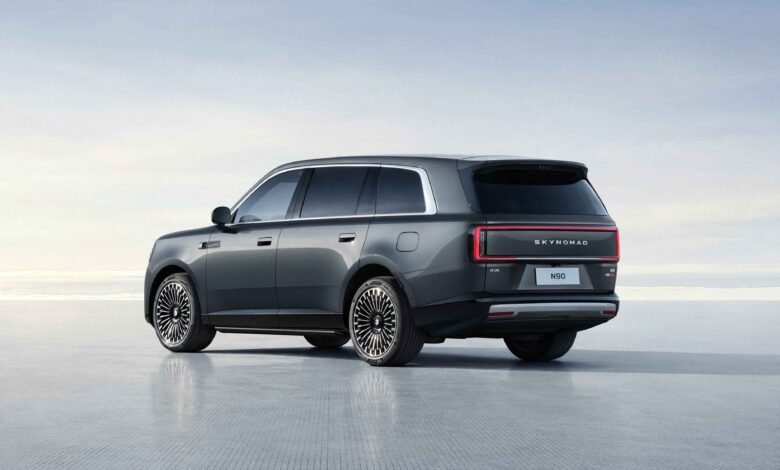
On 7 September at 7pm Beijing time (2pm in Nairobi), Xiaomi will unveil a massive hardware lineup at its autumn product event, headlined by its new Sky Nomad range of SUVs. Yet, despite Xiaomi’s aggressive push into the automotive space, not a single one of these new vehicles is fully electric.
Instead, the N70 Pro, N70 Max, and the larger N90 Max are Extended-Range Electric Vehicles (EREVs). This format represents the version of Xiaomi’s car business that a market like Kenya would actually buy, if only the steering wheel were on the right side.
Understanding the EREV: An Electric Car with a Built-in Power Plant
An extended-range electric vehicle is essentially an EV that carries its own onboard generator. The car is driven entirely by its electric motors at all times; the petrol engine never mechanically turns the wheels. When the large battery pack runs low, a 1.5-litre Dongan petrol engine automatically fires up to generate electricity for the motors. You get the silent, instant torque of an EV, but you can fuel up at a standard petrol station if you cannot find a plug.
Xiaomi built these vehicles on its own Kunlun platform, a project developed over three and a half years starting in early 2023. The specifications are formidable:

- The N70 Max: A five-seat SUV measuring 4,960mm in length and 1,998mm in width, riding on a 2,950mm wheelbase, offering a choice between a 52 kWh Sunwoda LFP battery or a 76 kWh CALB nickel-manganese-cobalt pack. The larger battery delivers 505 kilometres of electric-only range on China’s CLTC test cycle, or 380 kilometres on the stricter WLTC cycle. With a full 45-litre tank, the combined range reaches 1,461 kilometres. Its dual motors produce 310 kW (416 hp), pushing the car to 100 km/h in 5.9 seconds.
- The N90 Max: A seven-seat giant spanning 5,285mm on a 3,080mm wheelbase. Inside, the 2+2+3 seating layout features a front pair that can swivel 180 degrees to face the second row. Using the 76 kWh battery pack, the only one offered on this model, it manages 464 kilometres on pure electricity and a staggering 1,705 kilometres of total range with a full battery and a full tank. Top speed is 190 km/h.
- Fast Charging and Smart Tech: The 76 kWh pack charges from 20% to 80% in just 18 minutes. Both models feature Xiaomi’s HAD driver assistance system, powered by a 700 TOPS Nvidia Drive Thor chip and a roof-mounted lidar unit.
Pre-sales for the Max variants opened on 30 July with a refundable 1,000 yuan deposit. Xiaomi CEO Lei Jun noted on 30 July that the N70 Max holds the longest electric-only range of any production extended-range vehicle, beating rivals that max out at 500 kilometres or below.
Pricing is highly competitive in China. The N70 Max commands a pre-sale price of 259,900 yuan (approximately KES 5 million), while the N90 Max is set at 299,900 yuan (roughly KES 5.7 million) before shipping and taxes. The N70 Pro’s pricing remains unannounced.
The Xiaomi September Hardware Ecosystem: Beyond the Cars
The 7 September launch is not just about automotive hardware; Xiaomi is dropping highly anticipated mobile gadgets that integrate into its “Human x Car x Home” strategy. Launching alongside the Sky Nomad vehicles are:
- The Xiaomi 18 Fold: The company’s first inward-folding foldable smartphone featuring a wide aspect ratio. It serves as the debut device for Xiaomi’s new proprietary 3nm Xring O3 AI processor and features LPDDR6 memory.
- The Xiaomi Pad 9 Pro Max: A flagship tablet also running the Xring O3 processor, aimed at professional workloads like video editing and digital illustration, backed by a battery exceeding 10,000mAh and 120W fast wired charging.
Why Sky Nomad Formula Works for Kenya
For Kenyan buyers, range anxiety remains the primary hurdle for EV adoption. An EREV is the perfect bridge. A 505-kilometre electric range comfortably covers a week of commuting in Nairobi on a home charger. Because Kenya Power has been moving EV owners onto a cheaper charging tariff, everyday driving remains incredibly cheap. For a weekend drive to Mombasa, the petrol engine simply takes over without requiring a single stop at a public charging station.
Furthermore, the market is primed for high-end Chinese vehicles. Competitors have already proven the concept:
- Jetour put four SUVs on sale in Kenya in November 2025, priced between KES 4.9 million and KES 7.8 million, with a massive KES 1.4 billion commitment to local assembly in Mombasa.
- BYD introduced the Shark 6 plug-in hybrid pickup to Kenya in September 2025 supported by NCBA financing.
- SBM Bank put KES 1 billion into green financing in April 2026 for a leased BYD fleet.
Xiaomi enjoys a unique advantage: profound brand loyalty. Kenyans already trust Xiaomi’s smartphones, TVs, and smart home appliances. In Q3 2025, Xiaomi captured 13% of African smartphone shipments with a 34% annual growth rate. The brand solidified this presence by opening a localised Kenyan website in January 2026 and demonstrating its entire integrated ecosystem in Nairobi in December 2024.
Left-Hand Drive and Taxes
Despite the perfect product-market fit, Kenyan buyers are locked out for now. Xiaomi currently manufactures exclusively for left-hand drive markets, and its European launch in the second half of 2027 is a left-hand drive launch too.
Under Kenya’s KS 1515:2000 road vehicle inspection standard, importing left-hand drive vehicles for civilian use is strictly prohibited. Right-hand drive production is slated for the first half of 2028, targeting markets like the UK, Japan, Australia, India, and Southeast Asia. Currently, Xiaomi has not indicated any plans to bring the Sky Nomad to Africa, and the continent does not appear on its published market roadmaps.
Even if the cars did arrive, pricing would shift drastically. The attractive KES 5.7 million price tag for the N90 Max is a base showroom figure in China. Once shipping, import duty, excise, and VAT are applied, the final cost would comfortably eclipse the KES 7.8 million mark of rivals like the Jetour T2. Because these vehicles technically run a petrol generator, they do not benefit from the strict EV tax breaks; in fact, Kenya’s decision to move electric vehicles from zero-rated to VAT-exempt on 1 July 2026 has ultimately pushed retail prices up.









Join the discussion