
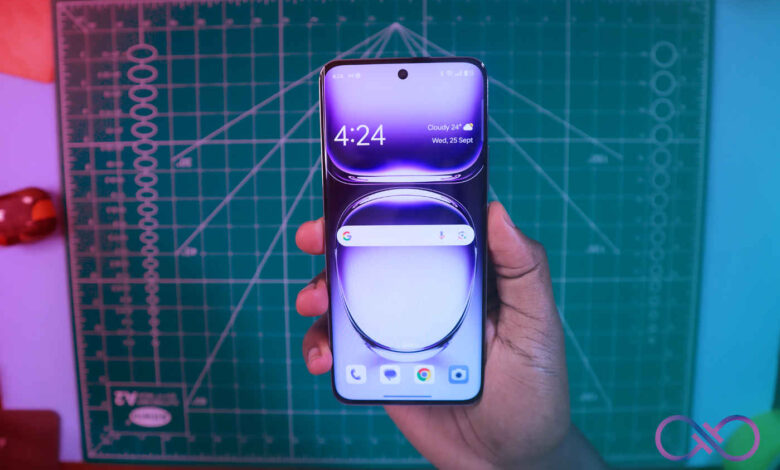
A Milimani magistrate has refused to strike content creator Foi Wambui out of the copyright suit over the music in her OPPO Reno 12 5G advert. Her application to have her name removed was dismissed with costs. She goes to a full trial alongside OPPO Kenya and Aifluence Limited, the agency that ran the campaign.
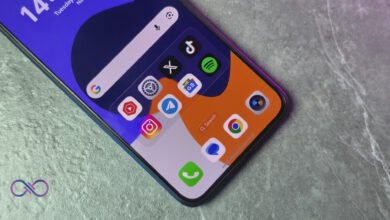
The suit belongs to Joshua Mutoriah Mwaura, the singer and producer who records as Mutoriah. He owns “Beta”, a 2023 song that was getting heavy airplay through 2024. Wambui used it as the soundtrack of a skit selling the Reno 12 5G, posted in August 2024. That was inside the Reno 12 series pre-order window in Kenya, which ran from 23 August to 1 September 2024. We covered that launch and reviewed the phone a month later.
She was paid KES 600,000 for the campaign. At the time she had roughly 323,000 followers on Instagram and 265,000 on TikTok.
Mutoriah’s lawyer wrote on 10 September 2024 asking for a public apology and an admission of infringement. Wambui’s side offered KES 50,000. He refused it and filed suit on 7 November 2024. She applied to be struck out a year later, on 7 November 2025.

The licence at the centre of the case
Mutoriah’s claim rests on one document. He says nobody on the campaign got a synchronisation licence for “Beta”, and no defendant has produced one.
A sync licence is the permission you need to marry a piece of music to moving pictures. It’s separate from buying the song, streaming it, or playing it in a shop. Section 26 of Kenya’s Copyright Act gives the owner of a musical work the exclusive right to control its reproduction, its communication to the public and its making available. Putting “Beta” under a phone advert and posting that advert does all three.
Creators keep getting the next part wrong. The blanket licence a collecting society sells doesn’t cover this. PAVRISK and KAMP license public performance and broadcast, the money a radio station or a bar pays to play records. Sync is cleared with whoever holds that specific right, normally the owner, and the owner is free to say no or to charge whatever the campaign is worth. There’s no set tariff. You ask.
Exceptions? The Act’s Second Schedule allows fair dealing for research, private use, criticism, review, reporting current events, parody and quotation. Selling a phone isn’t on the list.
Who’s to blame?
Foi Wambui’s case is that she was an independent contractor whose content was subject to OPPO’s review and approval, so securing the music rights was OPPO’s job. She told the court she had no control over the final approved version of the advert.
OPPO’s case is that it never contracted Wambui at all. It engaged Aifluence, which retained her as a brand influencer, and it didn’t dictate which songs she used.
Mutoriah’s reply is short. The video went up on her account, she was central to making the skit, and she has been in the industry long enough to know how clearance works.
Aifluence is the third defendant. It’s also the agency at the centre of the other fight from this campaign, when Flaqo went public in February 2025 over unpaid work on the Reno 12 series. OPPO said then that it had paid Aifluence in full, with the balance settled on 25 October 2024, and sued the agency for defamation and brand harm. The same campaign has now produced two court files.
This has already been decided once
In April 2022, content creator Brian Mutinda posted an Instagram video promoting a Syinix U51 television. Nonini’s “We Kamu” was used in the video without a sync licence.
Mutinda’s defence was that he had nothing to do with the finished advert. “I am not an agent of the company and have no control over what they post,” he told the court. He said he delivered a silent video and someone else added the music.
The court rejected it, because he couldn’t produce the raw footage or the contract to back it up. On 5 September 2024, Principal Magistrate Hosea Ng’ang’a of Milimani Commercial Court found Mutinda and Syinix Electronics jointly liable and awarded Nonini KES 4 million in general damages, plus costs and interest. The magistrate turned down the request for aggravated and punitive damages. Mutinda has appealed to the High Court.
Mutoriah’s demand letter went out five days after that judgment.
The magistrate who wrote it is Hosea Mwangi Ng’ang’a, a principal magistrate at Milimani Commercial Court, which is the bench now hearing Mutoriah’s case. The ruling on Wambui’s application names him as Hosea Mwangi. His rank sets the ceiling on what Mutoriah can win. Under the Magistrates’ Courts Act, a principal magistrate can award up to KES 10 million, a senior principal magistrate KES 15 million and a chief magistrate KES 20 million.
Nothing has been proven against anyone yet. The ruling is narrow. It says only that Mutoriah has pleaded facts disclosing a reasonable cause of action, and that who chose the song, who approved the final cut and whose job the licence was are questions for a trial. Neither OPPO Kenya nor Aifluence has published anything about the ruling.
For anyone taking brand work, the practical lesson sits in how Mutinda lost. He said the brand added the song, and he couldn’t show the file or the contract that said so. If you take brand money and the work goes out on your account, the court will treat you as a publisher and make you prove otherwise. So keep the signed scope of work, keep the raw export you actually delivered, and get the sync licence named in writing before anything goes live.





Join the discussion