

On Monday 12th October 2026, Microsoft told everyone at its Africa Development Centre (ADC) in Nairobi that their jobs are going. We’ve confirmed this with people at the centre. Microsoft calls them “proposed changes”. It hasn’t said how many people are affected, or when the last day will be.
Seven years earlier, in May 2019, Microsoft’s executives sat at State House in Nairobi. Uhuru Kenyatta told them, “We want you to make Kenya your African home.”
The ADC was meant to be that home. It wasn’t a sales office. Microsoft Kenya, which sells Windows, Office and Azure to banks, government and businesses, is a separate business. Microsoft says it will keep operating in the country. The ADC was where Kenyan and Nigerian engineers wrote code for Microsoft’s global products.
For a while, it worked. Microsoft said it would hire 500 engineers across Nairobi and Lagos by 2023, and said it passed that number a year early. It built two new offices. Then Lagos was shut in May 2024. Now Nairobi is going too.

Before the ADC
If you were a good software engineer in Nairobi in 2018, your options were limited. You worked at a local software house such as Craft Silicon or Seven Seas, in a bank’s IT department, or at Safaricom, which for years was the dream employer. Global tech companies hired Kenyans mostly for sales, support and marketing. IBM had opened a research lab in Nairobi in 2013, but the work of building the products themselves mostly happened in Redmond, Dublin, Hyderabad or Beijing.
Microsoft’s own presence had the same shape. Its 4Afrika programme, launched in 2013, was about affordable devices, internet access and skills training. Even its Nairobi software testing centre, opened in 2018, was run by a local partner, Techno Brain.
So when Microsoft said it would put its own engineers in Nairobi and Lagos, that was new.
The pitch, May 2019
The first sign came in March 2019. Microsoft posted job ads in Lagos for a team that would build cloud services for mixed reality, the technology behind Microsoft’s HoloLens headset, which places digital objects into the room around you. Alex Kipman, the HoloLens chief, announced on X (then Twitter) that his team was opening an engineering office in Lagos. Nairobi roles were advertised the same month.
On Monday 13th May 2019, Uhuru Kenyatta hosted Phil Spencer at State House. Spencer, who ran Xbox until he retired in February 2026, was the ADC’s executive sponsor, the senior executive who argues for a project inside the company. He said the centres would serve “global businesses such as Office, Azure and Windows”. Kenyatta promised “100 per cent support”. He also gave a warning: “Ensure we do not lose the intellectual property rights that belong to our young people.”
Microsoft’s announcement set the targets: 100 full-time engineers by the end of 2019, and 500 across Nairobi and Lagos by 2023. It expected to invest USD 100 million, or about KES 13 billion, over five years. The slogan was “local innovation, global impact”, and the release named fintech, agriculture and off-grid energy as sectors that mattered here.
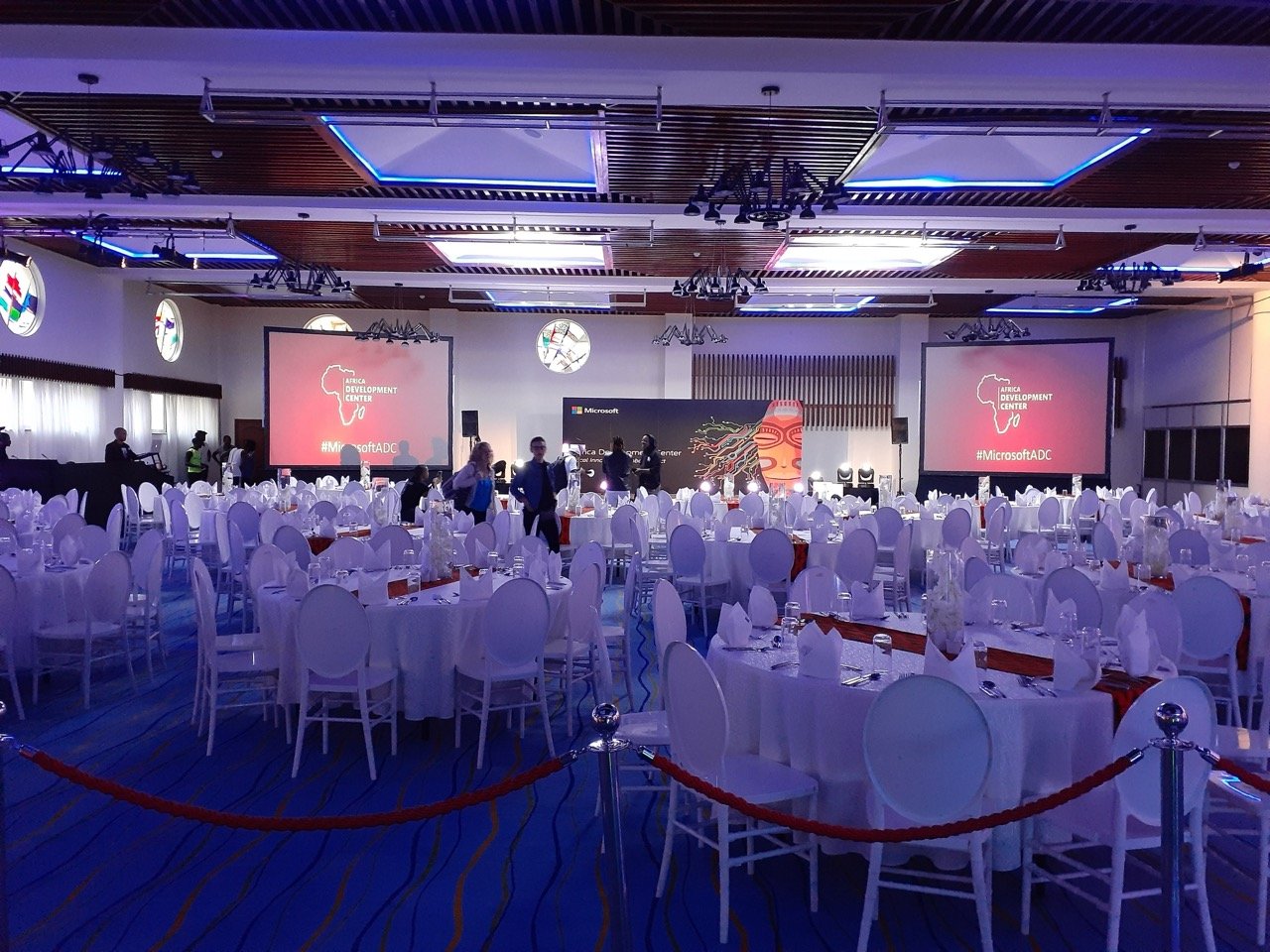
The Nairobi launch was on Tuesday 14th May 2019, and Lagos followed on Friday 17th May. The engineers sat in Microsoft’s existing offices, at The Oval in Westlands and Civic Towers in Lagos. I spoke to Spencer that day. He played a full Xbox game on his phone through xCloud, Microsoft’s game streaming service, and said that if it was sold as a subscription, people could pay with M-Pesa. Seven years later, Xbox’s list of supported countries still doesn’t include Kenya or Nigeria.
Hiring at speed
Days after the Lagos launch, the ADC had already hired 29 full-time engineers, 19 in Kenya and 10 in Nigeria. Jack Ngare, who had run Equity’s Finserve, became managing director in Nairobi that August. Gafar Lawal came back to Microsoft from Morgan Stanley to run Lagos.
COVID didn’t slow it down. By March 2022, Microsoft said the Nairobi centre had more than 450 full-time employees, and most of that growth happened during the pandemic. Local companies, telcos included, had to raise pay to keep their own people, and the ADC’s hiring was criticised as poaching. Demand from engineers was never the problem. Lawal later said that when Microsoft posted its first roles in Nigeria, “we had over a thousand applications in one hour.”
The centre also built around itself. It ran Game of Learners, a hackathon for university students, reviewed computer science courses with universities such as JKUAT, and in July 2020 got a research lab of its own, the Microsoft Africa Research Institute, led by Jacki O’Neill.
What Nairobi and Lagos actually built
Microsoft hasn’t published a list of features “made in Nairobi”. But you can piece it together from its own interviews and from public code.
Start with identity. Every time you sign in to a Microsoft account, Outlook, Teams or a work laptop, a set of systems checks who you are and what you’re allowed to open. That’s Microsoft’s identity business, now called Entra, and it’s where much of the Nairobi centre worked.
In April 2022 Microsoft published an interview with George Maina, one of the ADC’s first hires. When he joined, the whole Nairobi centre had three teams of about seven people each. His team owned the process for bringing Microsoft’s internal teams onto Microsoft Graph, the single doorway developers use to reach Microsoft 365 data such as mail, calendars and files. The interview was with Igor Sakhnov, a vice president in identity engineering. Maina reminded him of what he’d said on a visit to Nairobi: that he’d evaluate the operation after a few years, because “it was an experiment”. Sakhnov replied: “For me, the experiment ended a year ago when we started seeing excellent outcomes from the Nairobi office.”
Public code backs that up. Microsoft publishes many of its developer tools on GitHub, and every change is credited to the engineer who made it. Engineers who list Nairobi as their location are among the top contributors to Graph Explorer, the site developers use to test Graph requests, and to Kiota, the tool that generates Graph’s code libraries. A Nairobi-based engineer is the top contributor to the Graph library for .NET, which has been downloaded more than 256 million times. So if a developer anywhere wrote an app that reads Microsoft 365 mail or calendars, there’s a good chance they used code partly maintained in Westlands. Kenya-based engineers also appear as inventors on at least eight Microsoft patent families, such as this one.
Lagos built different things. Its best-known work was Microsoft Mesh, a mixed-reality platform that launched in March 2021 and let people in different places meet and share 3D holograms. Microsoft’s Mesh engineering manager said then that the team “here in Lagos” had worked towards it “for a very long time”.
Then there was research. The lab, now Microsoft Research Africa, has done some of the most Africa-specific work anywhere in Microsoft. Its Project Gecko is testing a farming assistant where a farmer in Nyeri asks a question out loud in Kikuyu and gets an answer in Kikuyu. In February 2026 it released PazaBench, which measures how well speech recognition handles 39 African languages.
Notice the split. Research did the Africa-specific work. The engineering teams worked on Microsoft’s global products. That split comes back later.
Two buildings in one week, March 2022
On Monday 21st March 2022, Microsoft opened its Lagos office at Kings Towers in Ikoyi. Lawal said at the opening, “We planned to have 500 engineers after four years, in 2023. I can tell you that today we already have 570 engineers.” He said Microsoft had invested “over two hundred million dollars”, about KES 26 billion, across both centres in three years, twice the 2019 pledge. “For this building alone, we have invested almost 70,” he added, which in context means about USD 70 million, or about KES 9 billion.
Three days later, on Thursday 24th March, Uhuru Kenyatta opened the Nairobi office at Dunhill Towers on Waiyaki Way. It had a small solar plant, water recycling and self-heating windows, and it housed the Microsoft Garage, a maker space for staff and students.
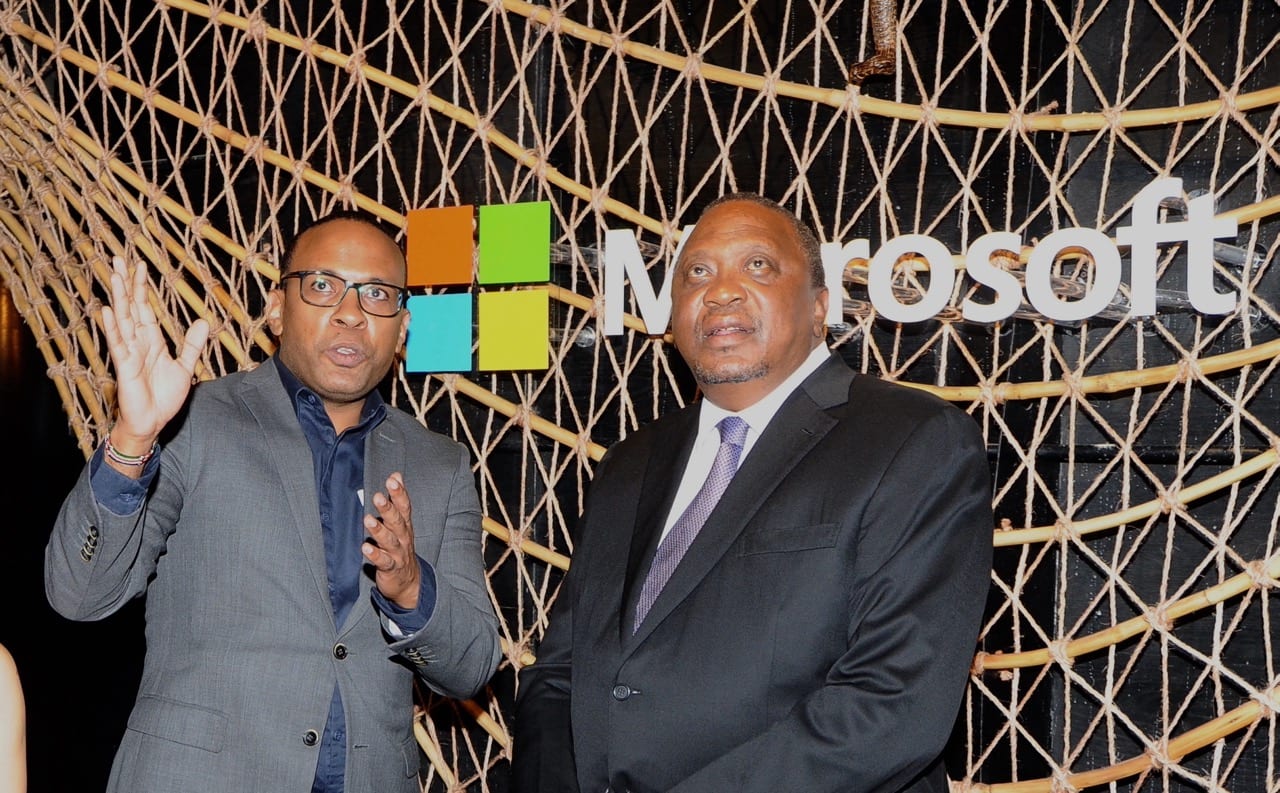
Joy Chik, who then ran Microsoft’s identity division and had replaced Spencer as the ADC’s sponsor, was there. “At Microsoft, we have always hired the smartest engineers we can find. That’s why we came to Kenya!” she said. In Lagos she had promised that “we are definitely going to hire more engineering talent.”
By our count, Lawal’s 570 is Nairobi’s 450 plus the 120 engineers Microsoft said Lagos had. Microsoft’s release called the Nairobi 450 “full-time employees”, but Chik and Ngare both called them engineers, and by December 2022 Microsoft had more than 500 engineers in Nairobi and more than 200 in Lagos. By Microsoft’s account, the target wasn’t missed.
The founders were already leaving. About a month after the Dunhill opening, Ngare left for Google Cloud, just as Google was opening its own product centre in Nairobi. In June 2022, Kipman left Microsoft after a report alleged misconduct towards female employees. Catherine Muraga, who had led engineering at Stanbic, took over in Nairobi on 1st June 2022.
The first cuts, March 2023
In January 2023, Satya Nadella announced 10,000 job cuts. US staff got above-market severance, six months of health cover and continued stock vesting. For everyone else, his memo said: “Benefits for employees outside the U.S. will align with the employment laws in each country.”
In March 2023 those cuts reached Nairobi. Product managers and engineers were told their roles were redundant. Microsoft never said how many.
One of them was Kipkorir Arap Kirui, a senior product manager who had worked on the identity team. He wrote that he was told on 27th March, and that staff got two months’ notice and pay for unused leave. In May 2023 he wrote that the timing of the notices meant they would miss a stock vesting date by three days. Stock is a large part of how big tech pays its staff, and shares only become yours if you’re still employed on each vesting date. In 2026 he wrote that staff pushed back together, and that without it they would have left on “dismal terms”, including notices “timed precisely to prevent that quarter’s stock from vesting”. He also wrote that pay in Nairobi was set on “the cost of labor and not the cost of living”.
The ADC carried on. But from then on, Kenyan law, not Microsoft’s US terms, set the floor for anyone who left.
Lagos goes first, May 2024
On Monday 6th May 2024, staff at the Lagos centre were told it was closing. On Wednesday 8th May, Microsoft confirmed it: “Microsoft has decided to close the Africa Development Centre in Nigeria.” An updated statement the next day added, “This is not a site closure,” and “We will continue to operate in Nigeria.” Microsoft’s Nigeria office, which handles sales, marketing and support, stayed open. It also said, “There are no impacts to the Africa Development center in Kenya.”
Nobody ever established how many people lost their jobs in Lagos. Early headlines said 200, but that was the March 2022 headcount reused. Temitope Ajayi, an aide to Nigeria’s president, said on X that fewer than 30 were affected and that the centre was “not shutting down”, which contradicted Microsoft’s own statement. Staff were reportedly given two months’ salary.
At the time, it was read as a Nigerian problem. The naira had collapsed, and companies such as P&G and GSK had pulled back from the country. Kenya looked like the winner. In July 2024, Microsoft was reportedly cutting its Lagos office from six floors to two, and the engineers who were left were reportedly asked to move to Kenya.
Two years later, it’s the Kenyan centre that’s closing. Lagos’s showpiece didn’t last either: Microsoft retired Mesh on 1st December 2025.
Kenya gets a bigger bet, and it stalls
Two weeks after confirming the Lagos closure, Microsoft made its biggest ever promise to Kenya. On 22nd May 2024, Microsoft and G42, an AI company from Abu Dhabi, announced a USD 1 billion package, or about KES 130 billion, centred on a geothermal-powered data centre at Olkaria. The ADC was part of the pitch. Developers from the ADC, “which has 500 employees in Nairobi”, would mentor startups at a new innovation lab. That’s the last headcount Microsoft has given for the centre.
The data centre hasn’t been built. In May 2026, talks reportedly stalled because Microsoft and G42 wanted Kenya to commit to paying for a set amount of capacity every year, at a level the government couldn’t meet. William Ruto had said switching the full project on would mean shutting off power for half the country. The government however argued in May that the project wasn’t dead.
Nothing on record links the stalled data centre to the ADC closure. But that’s the order things happened in: the centre was part of Microsoft’s big Kenya bet in 2024, the bet stalled in 2026, and five months later the centre is closing.
The last two years
From the outside, the ADC looked busy. Its website listed student and lecturer programmes, high school bootcamps and tech meetups, and its X account was still promoting developer workshops on 2nd September 2026.
The website itself told a quieter story. It kept a “Leadership – Nigeria” link in its menu until mid-2025, a year after Lagos closed, and Microsoft’s page for its Lagos managing director is still live today.
Microsoft also signalled what was coming. On 6th July 2026, when it cut about 4,800 roles worldwide, its HR chief Amy Coleman wrote that “engineering teams across the company will also evolve their structure and priorities”, and that “there will be more changes ahead”.
On 23rd September 2026, Kirui, now at Google, posted again. He wrote that, according to several ADC staff he had spoken to, multiple people were given a choice towards the end of the third quarter: a performance improvement plan with six weeks to turn things around, or a “voluntary” exit. He also wrote that staff were told they could share the draft exit agreement only with a spouse, not a lawyer. That’s his account of what others told him, and Microsoft hasn’t commented on it publicly.
Then came Monday 12th October. William Kabogo, the ICT Cabinet Secretary, met a Microsoft delegation and wrote afterwards that he had stressed “protecting jobs at Microsoft’s Nairobi engineering centre“. The same day, staff were told. Microsoft’s statement said it was “communicating directly with employees in Kenya about proposed changes to our engineering operations” and “will continue to have employees in the country”. In 2024, Microsoft at least said plainly that it had decided to close Lagos. This time, it hasn’t used the word.
Where it went wrong
Microsoft hasn’t said why it’s closing Nairobi. So this is our reading of the evidence.
The talent wasn’t the problem. Microsoft said it hit its hiring target a year early. One of its vice presidents called the Nairobi experiment a success in 2022. Nairobi engineers helped maintain tools developers worldwide use every day.
Microsoft’s money moved to data centres. Microsoft’s cash spending on buildings and equipment, most of it for data centres, went from about USD 28 billion (about KES 3.6 trillion) in the year to June 2023 to about USD 65 billion (about KES 8.4 trillion) two years later, according to its own results, and it says that spending will keep growing. Its headcount is going the other way. By the end of June 2026 it was down 2% on a year earlier, and finance chief Amy Hood had told investors to expect it to fall again in the year starting July. That puts pressure on every Microsoft office, though it doesn’t explain why one closes and another doesn’t. Microsoft also says the roles it cut in July “are not being replaced by AI”, so we won’t claim they were.
The engineering could be done anywhere. The ADC’s pitch mentioned Africa’s sectors, but the engineers always worked on Microsoft’s global products: mixed-reality cloud services in Lagos, sign-in and Graph in Nairobi. By 2026 the Nairobi teams were on sign-in, Microsoft 365, Windows, security and developer tools. That’s important work, but the code for a sign-in page doesn’t need to be written in Nairobi. When a company has to shrink, a team whose work could be done in Redmond, Dublin or Hyderabad has to win on cost.
Look at what survived elsewhere. Google still lists its research centres in Accra and Nairobi, which work on food security, agriculture and sustainability problems that matter in Africa. IBM still lists its Africa research lab in Kenya. In June 2024, a year after it let go of its Lagos engineering team, Meta said its “engineers continue to serve the region from a number of our global engineering hubs outside of Nigeria“. It’s a small sample, and Google and Amazon both opened engineering centres in Nairobi in 2022 and 2023 that we’ve found no reports of closing. So treat it as a pattern, not a rule. Microsoft Research Africa, the one part of the ADC with an African mandate, is still publishing, and Microsoft hasn’t said whether it’s affected.
Nairobi wasn’t as cheap as people assume. Self-reported figures on Levels.fyi, a salary site, put the median total pay for an entry-level Microsoft engineer in Kenya at about KES 6.8 million a year, or about USD 52,000. In Bengaluru it’s about USD 30,000, or KES 3.9 million. Senior pay is roughly level. The Kenyan sample is small, so take it as a hint, not a measurement.
Tax and the shilling probably aren’t the reason. On 12th October, a post on X blamed Kenya’s “nasty unpredictable tax regime”. The numbers don’t back that up. Say an engineer earns KES 500,000 a month. Since 2023, Microsoft has had to pay the housing levy, KES 7,500, and a bigger NSSF contribution, at most KES 6,480. That’s under 3% of the salary. The higher PAYE bands come out of the engineer’s pay, not Microsoft’s. The shilling did strengthen in early 2024, from about KES 160 to the dollar in January to about KES 131 in March, which made Kenyan pay dearer in dollars. But it has held at about KES 130 since, so it doesn’t explain 2026.
Its sponsors left. Spencer, the ADC’s first executive sponsor, retired in February 2026. Chik, who replaced him, said in April 2026 that she would retire in July. Nairobi’s first managing director left weeks after the new office opened, and Kipman left the same year. Muraga has run the centre since 2022, but a site director doesn’t decide headcount in Redmond. A centre that does global work, with no revenue of its own and no senior sponsor, is easy to cut on a spreadsheet. That’s our analysis, not something Microsoft has said.
It was always an experiment. That’s how Sakhnov described it on a visit to Nairobi, as Maina remembered it. In 2022 he said the experiment had succeeded. But the ADC never stopped being something Microsoft could switch off. Lagos showed that in 2024. Kenya was told it wasn’t affected, and that held for two years.
What’s left
Microsoft isn’t leaving Kenya. It will still sell software here. But the engineering, the part that made Nairobi different from every other sales office, is going.
What stays is harder to measure. Hundreds of Kenyan engineers now have years of experience building products used by millions of people. Some will go to Google, Amazon or startups, and some will work remotely for companies abroad. Still, for seven years, a Kenyan engineer could build Microsoft’s global products without leaving the country. Once the last ADC jobs end, that option is gone.
Microsoft hasn’t said how many people are affected, when the jobs end, what it will pay beyond the legal minimum, or whether Microsoft Research Africa and the Garage are included. Until it does, the people at Dunhill Towers know only that the experiment is over.






Join the discussion