

With Airtel Kenya shaking up the 5G router scene with its new pricing and speeds, I couldn’t resist diving into a little annual cost showdown between our two 5G giants—Safaricom and Airtel. Sure, both telcos are flexing their 5G muscles, but let’s be real: the coverage is still spotty, and the price tags? As someone who loves a good internet binge, I’m here to crunch the numbers and help you decide which router might save your shillings at the end of the year—while spilling the tea on what you might sacrifice along the way.
Safaricom’s 5G Home Router Plans: Speedy but Pricey!
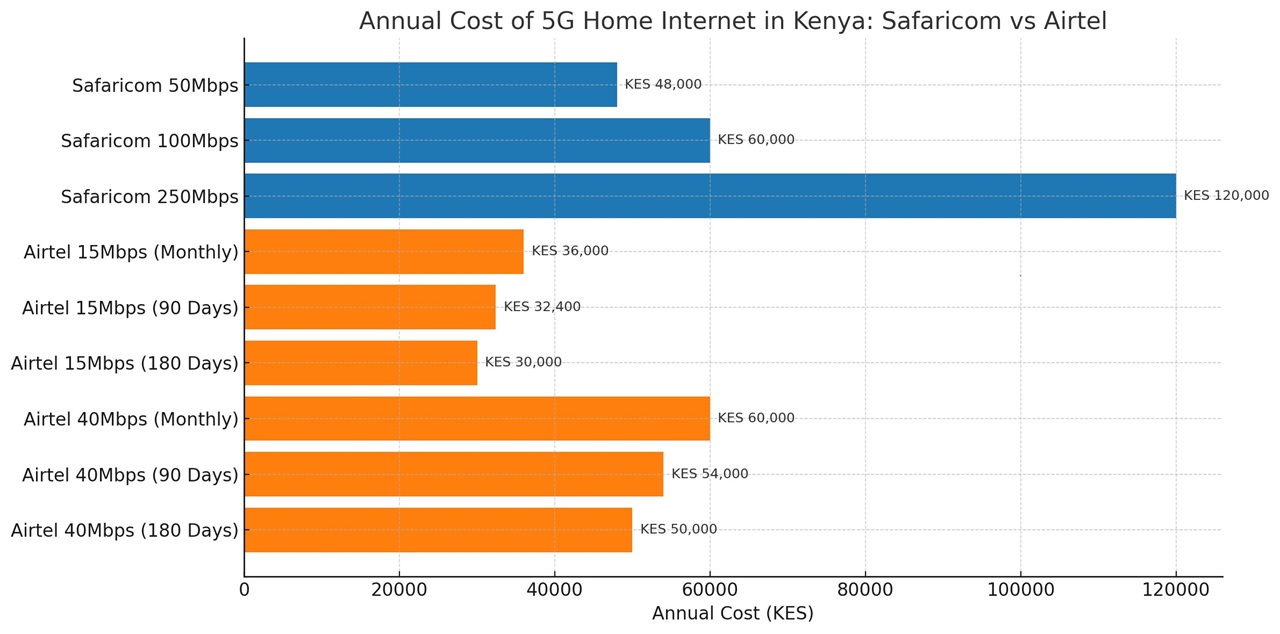
Safaricom’s 5G home router plans are like the flashy kid in class—impressive speeds, but the bill stings. Their base plan clocks in at 50Mbps for KES 4,000 a month, which adds up to KES 48,000 a year. Then there’s the 100Mbps plan at KES 5,000 monthly—KES 60,000 annually—and the premium 250Mbps beast at KES 10,000 a month, totaling a jaw-dropping KES 120,000 per year! That’s a chunk of change for streaming Netflix (which you pay separately) or scrolling X, right?
If you’re someone who’s barely home to use the internet beyond a few evening hours and weekend vibes, spending over KES 100,000 annually feels like a luxury vacation you can’t afford. Even KES 48,000 a year on Wi-Fi? That’s a luxury many Kenyans can only dream of, which echoes the Communications Authority of Kenya’s recent revelation: 92% of wealthy Kenyans have internet access, while just 8% of the poorest do.
Airtel’s 5G Home Router Deals: Cheaper but Still a Stretch
Airtel Kenya’s new plans are waving a friendlier flag, but they’re no bargain basement either. Their base 15Mbps plan starts at KES 3,000 monthly, totaling KES 36,000 a year. Pay every 90 days (KES 8,100), and you’re looking at KES 32,400 annually. Go for the 180-day option (KES 14,999), and it drops to KES 30,000 a year—now that’s a savings I can get behind. But let’s climb the ladder to the 40Mbps plan: KES 4,999 monthly means KES 60,000 yearly, while 90-day payments (KES 13,499) bring it to KES 54,000, and 180-day chunks (KES 24,999) land at KES 50,000. As a Kenyan juggling bills with an average monthly wage in mind, these figures still feel like a splurge—especially when you’re only home to surf the web for a few hours.

Internet Access is Still a Luxury in Kenya
Let’s keep it real—whether it’s Safaricom’s KES 120,000 yearly for 250Mbps or Airtel’s KES 50,000 for 40Mbps over six months, these prices scream luxury. I can’t help but nod at the Communications Authority’s findings: internet access remains a playground for the wealthy. For the average Kenyan, spending KES 48,000 or even KES 30,000 a year on home internet feels like choosing between data or dinner. My own take? These costs highlight a gap we need to bridge—5G might be the future, but it’s not yet for everyone.
So, which 5G router should you pick if you’re hunting for savings? Airtel’s 15Mbps plan at KES 30,000 annually (180-day payments) beats Safaricom’s 50Mbps base plan at KES 48,000 hands down—saving you KES 18,000 a year. Even Airtel’s 40Mbps at KES 50,000 (180 days) undercuts Safaricom’s 100Mbps at KES 60,000, saving you KES 10,000. For the budget-conscious, Airtel’s multi-month plans are your golden ticket—less cash upfront, more savings over time.
But here’s the trade-off: Airtel’s top speed tops out at 40Mbps, while Safaricom zooms to 250Mbps. If you’re a hardcore gamer, 4K streamer, or work-from-home warrior, Safaricom’s higher speeds might justify the splurge—though you’ll sacrifice thousands of shillings. Airtel’s lower speeds mean smoother budgeting but slower browsing during peak times. Coverage is a wild card too—both networks are patchy outside major towns, so check your area first.
As someone who loves a good deal, I’m leaning toward Airtel’s 15Mbps plan for KES 30,000 a year—enough speed for my work, evening scrolls and weekend movie nights without breaking the bank. But if you’re a speed junkie like on a rare 4K binge, Safaricom’s 100Mbps might tempt you, despite the KES 60,000 hit. Either way, weigh your usage, check coverage, and pick what fits your wallet and lifestyle.






Join the discussion