

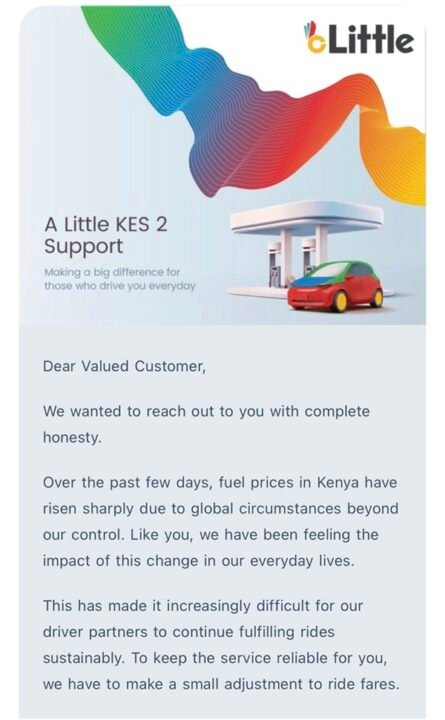
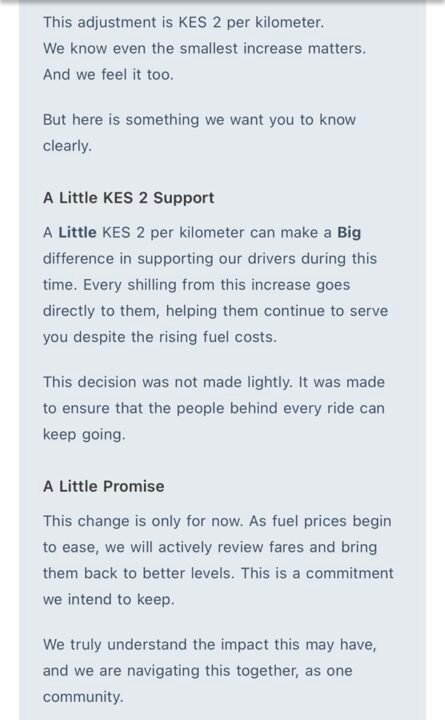
Little is notifying customers of a new temporary fare increase, with the ride-hailing company saying it will now charge an extra KES 2 per kilometre in response to the recent jump in fuel prices.
In an email sent to customers, Little says the adjustment has become necessary after fuel costs in Kenya rose sharply over the past few days. The company frames the increase as “A Little KES 2 Support”, arguing that the added amount will go directly toward helping driver partners keep offering rides despite the rising cost of petrol and diesel.
Little also tries to soften the blow by presenting the increase as temporary. In the same email, the company promises that once fuel prices begin to ease, it will review fares and bring them “back to better levels.” Whether that happens soon is another matter entirely, because fuel pricing in Kenya has lately been the kind of rollercoaster nobody asked to board.
This fare adjustment did not happen in a vacuum. Earlier this month, there was already concern after fuel dealers warned of a sharp price increase. That warning soon became reality when the regulator announced new pump prices for the April-May 2026 cycle, triggering immediate public concern over the cost of transport and everyday living.

A day later, the government revised the VAT rate used in the pricing formula, leading to a slightly lower review of the new fuel prices. Even then, the revision only reduced the damage. Fuel still went up sharply, and businesses that depend heavily on daily fuel consumption were always likely to pass at least part of that burden to customers.
That is now happening with Little.
For regular users, KES 2 per kilometre may sound small at first glance, but it can add up quickly on longer trips or on daily commutes. For drivers, though, the company is betting that customers will accept the added cost if they believe the money is directly cushioning the people behind the wheel.
Little’s message leans heavily on that argument. It says every shilling from the increase goes directly to drivers and insists the decision was not made lightly. That is a smart way to communicate a price increase, even if it still lands the same way in users’ wallets.
The bigger picture here is simple: when fuel prices jump, transport fares rarely stay still. And while Little is presenting this as a temporary support measure, it also shows just how quickly movements at the pump can ripple into the services that many Kenyans rely on every day.








Join the discussion