
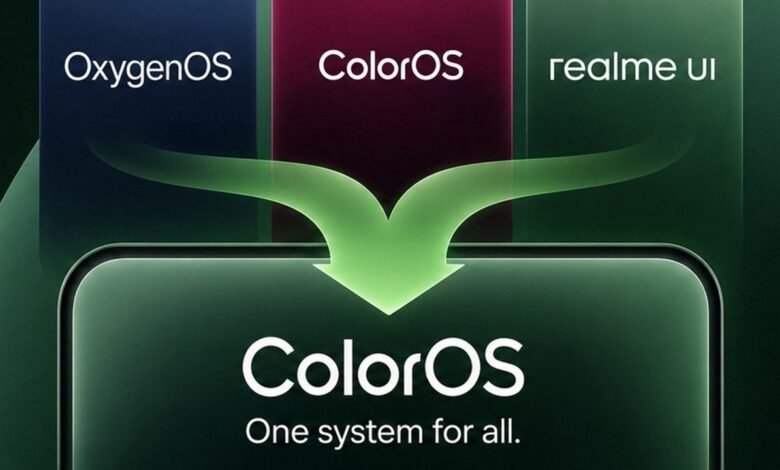
It is officially the end of the road for two of the most popular custom Android skins on the market. The illusion of choice within the BBK Electronics empire is fading, as both OnePlus and Realme have announced they are permanently retiring OxygenOS and Realme UI.
Going forward, eligible smartphones from both brands will receive the Android 17-based ColorOS 17 upgrade. But the software shakeup is just the tip of the iceberg. In a massive operational pivot, OnePlus is halting new product rollouts in North America and Europe, while Realme is entirely pausing its operations in its home market of China.
RIP OxygenOS and Realme UI
If you have been paying attention over the last few years, this writing has been on the wall. The underlying codebases for OxygenOS, Realme UI, and ColorOS were already heavily merged back in 2021 to streamline development. For the last few iterations, OxygenOS and Realme UI have essentially been ColorOS wearing a slightly different coat of paint.
Now, OPPO is finally ripping the band-aid off. According to a OnePlus community forum announcement, the shift is part of an “operational adjustment to our software strategy.”

Here is how the transition will work:
- The upgrade is voluntary (for now): Users globally with existing eligible OnePlus and Realme devices will have the option to voluntarily update to ColorOS 17.
- The rollback option: If you make the jump to ColorOS and hate it, OnePlus users will have a brief window to roll back to OxygenOS. The specific rollback versions will be announced later.
- Legacy devices: If you are rocking an older model that isn’t eligible for Android 17, you won’t be forced onto ColorOS. Your phone will continue to receive standard software maintenance and security patches on its current OS.
By unifying under ColorOS, the company claims it will “streamline software development, accelerate update delivery, [and] improve software quality.”
OnePlus closes shop in the West
The software consolidation comes alongside a massive geographic retreat. In an emotional community post, OnePlus confirmed it has decided to “conclude new product rollouts in Europe and North America.”
“Though we will no longer launch new products in Europe, our commitment to you remains unchanged,” the company stated, emphasizing that existing devices will still get their scheduled software updates and security patches backed directly by OPPO. Customer service and repair channels will remain open, and warranties will be honored.
While the brand noted that its Indian operations are currently continuing as usual, industry reports strongly suggest that this is only a temporary reprieve, with OnePlus reportedly eyeing a complete exit from the Indian market by 2027.
Realme retreats from China
Meanwhile, Realme is making a similarly drastic move on its home turf. Taking to Weibo, the company announced it is pressing the “pause button” on the Chinese market.
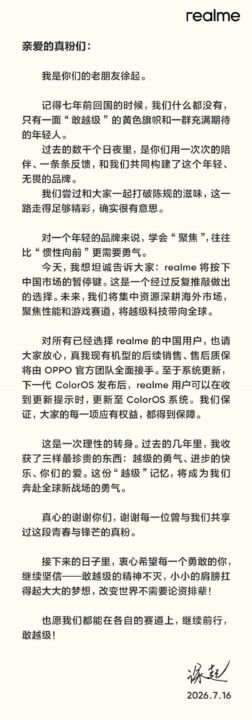
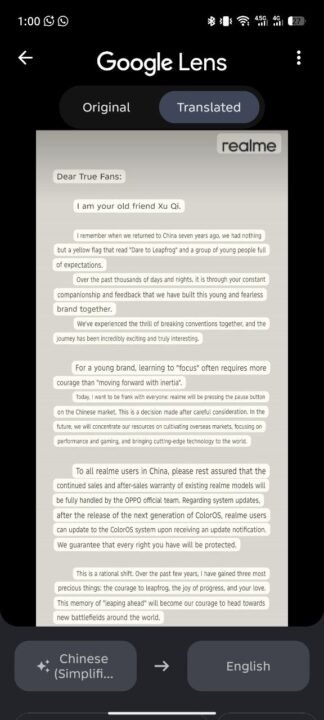
Moving forward, Realme’s existing models in China will have their sales and after-sales warranties fully handled by the official OPPO team. Once ColorOS 17 drops, Chinese Realme users will receive standard update notifications to migrate over.
Instead of fighting a brutal domestic price war, Realme says it will now concentrate its resources entirely on cultivating overseas markets. The brand plans to lean heavily into the gaming and performance segments to bring cutting-edge technology to the world.
For years, OnePlus and Realme positioned themselves as scrappy, independent disruptors fighting the industry giants despite being bankrolled by OPPO the entire time. This week’s announcements strip away that marketing facade.
While it is sad to see the iconic OxygenOS name die, it makes zero financial sense for OPPO to maintain three distinct software teams for what is effectively the exact same operating system. Furthermore, Realme’s pivot away from China to focus exclusively on overseas markets might actually be a net positive for consumers in Asia and Africa, where demand for aggressive, budget-friendly performance and gaming phones remains at an all-time high.








Join the discussion