
When I first wrote about Starlink’s biggest challenge in Kenya, one thing stood out above everything else: the internet itself isn’t the problem, but the upfront cost is.
For many households, paying around KES 30,000 or more for the hardware (depending on the kit) remains a far bigger hurdle than the monthly subscription. That’s why I welcomed Starlink’s recent decision to waive the activation fee for new customers, a move that significantly lowered the cost of getting connected. It wasn’t a complete solution, but it was certainly a step in the right direction.
SpaceX now appears to be taking that strategy even further.
The company has quietly introduced the Starlink V5 dish in the United States, and while it won’t deliver faster internet than the existing V4 hardware, it tells a much bigger story about where Starlink is headed.


With speeds up to 375+ Mbps, Starlink V5 delivers seamless connectivity

The new Starlink V5 is smaller, lighter, and cheaper to run
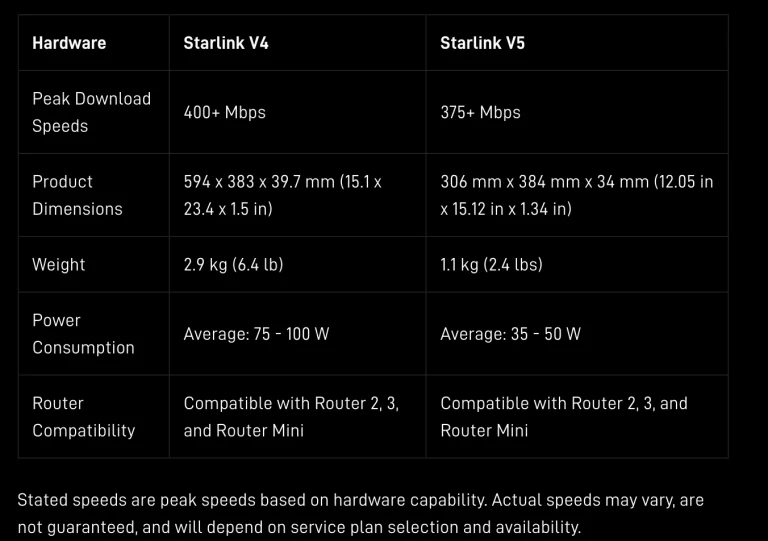
On paper, the V5 actually takes a slight step back in raw performance. Peak download speeds are rated at 375+ Mbps, compared to 400+ Mbps on the V4. But almost everything else has been redesigned with efficiency in mind.
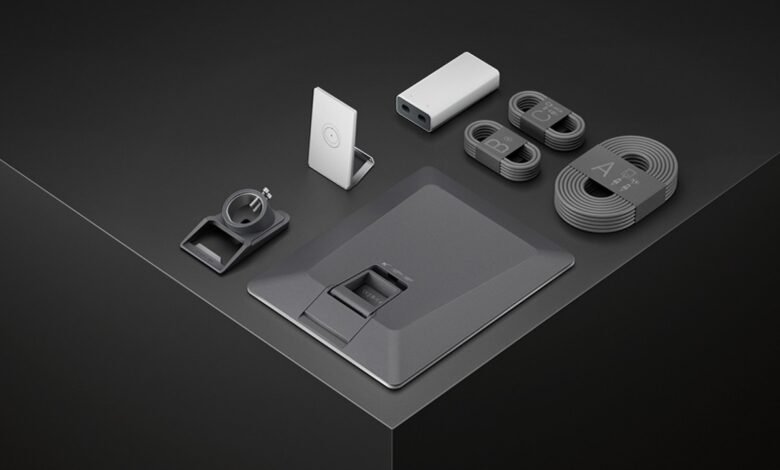
The new dish weighs just 1.1kg, down from 2.9kg, while average power consumption drops dramatically from 75–100W to 35–50W. That’s almost half the electricity usage, something that could be particularly meaningful in markets where energy costs matter. SpaceX has also made the hardware much more compact, bundled it with the smaller Router Mini, and included a roof-mount adapter in the box.
The new V5 is less about flashy upgrades and more about manufacturing and cost-saving upgrades. However, we still don’t know what it actually costs.
The biggest clue is where SpaceX is selling it
Perhaps the most interesting detail isn’t the hardware itself. In the US, the V5 dish is only available with Starlink’s new Residential 100Mbps plan, while customers paying for the faster 200Mbps and Residential Max tiers continue receiving the more capable V4 hardware.
To me, that says everything. Rather than replacing the V4, SpaceX appears to be creating a new entry-level ecosystem where slightly lower performance is traded for significantly lower production costs. That lines up perfectly with the company’s recent launch of the cheaper 100Mbps Residential plan. If that package eventually arrives in Kenya priced somewhere between KES 1,000 and KES 2,000 per month, it would immediately become one of the most compelling fixed internet options in the country.
We’ve already seen Starlink experiment with lowering the barrier to entry. First came the Starlink kit rentals and the entry-level KES 1,300/month 50GB data plan that launched to target budget users who subscribed to the rental kit. And then came the Starlink Mini, offering a cheaper alternative to the Standard kit. Then the company removed the activation fee for Kenyan customers, making it easier to join the network. More recently, it introduced a 100Mbps Residential plan overseas that targets users who don’t necessarily need pricier gigabit-class speeds.

The missing piece has always been hardware affordability. That’s why I believe the Starlink V5 dish is more important than its specifications suggest. If SpaceX can manufacture this new hardware more cheaply—and everything from its reduced size to lower power requirements points in that direction—it could eventually translate into lower hardware prices or more attractive monthly instalments for markets like Kenya.
For a country where many households still struggle with the initial investment required to get on Starlink, that’s arguably a much bigger upgrade than adding another 25Mbps of peak speed. On the contrary, the recent pause on new registrations in several counties across the country also hints at a market that is in high demand for fast and reliable internet.
Whether the new Starlink V5 dish eventually reaches Kenya remains to be seen. But if SpaceX is serious about expanding Starlink across Africa, reducing the upfront cost of ownership is exactly the battle it needs to win. And from where I’m sitting, the Starlink V5 looks like the company’s clearest signal yet that it understands that.









We have money in Africa just give us speeds latency and capacity not cheaper hardware
The V5 tied to the 100Mbps plan has so far been launched in the US alone. I think they have more money than us over there.
😂😂😂😂