

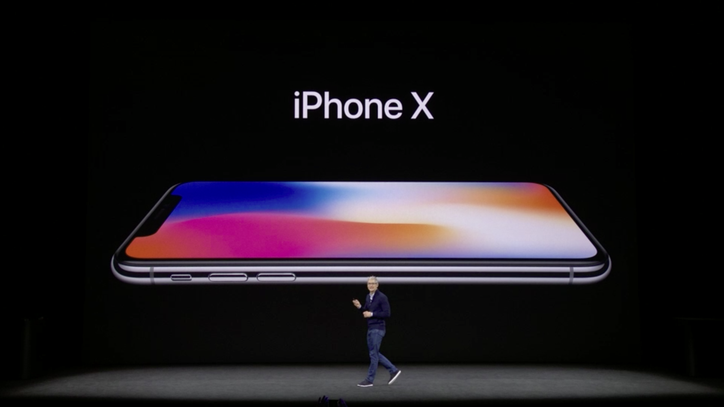
On 13 August 2026, Apple quietly updated its product graveyard. The iPhone X and the 15-inch 2018 MacBook Pro, both formerly lingering in the ‘vintage’ waiting room, have now been officially stamped as obsolete. You can spot the update on Apple’s support page, which now bears the mid-August datestamp.
What does ‘obsolete’ actually mean? It’s the end of the line for official hardware repairs. Apple’s wording doesn’t mince things: they halt all hardware services for these devices, and even authorised repair centres are blocked from ordering replacement parts. This applies whether you’re in or out of warranty. And let’s be honest, for machines this old, you’re definitely out.
Vintage vs. Obsolete: Knowing the Difference
Apple operates on a strict two-tier system, and knowing exactly where your device sits is crucial.
A device earns the vintage tag when Apple stopped selling it between five and seven years ago. You can still snag a repair at an Apple Store or an Apple Authorised Service Provider, but only if they happen to have the parts lying around. No guarantees.

Hit the seven-year mark, however, and your device becomes obsolete. At this point, the parts pipeline is welded shut. It doesn’t matter how much cash you wave at an authorised repair shop; they physically cannot order a new screen, battery, or logic board from Apple.
There are two tricky caveats here. First, the countdown starts from the day Apple last sold the device brand new, not its launch day. Second, Apple dictates the exact timeline, meaning that ‘seven years’ is a baseline rather than a legally binding schedule.
Take the iPhone X. It hit the shelves on 3 November 2017, but Apple killed its sales on 12 September 2018 to make way for the iPhone XS. It reigned as the flagship for a mere 313 days; the shortest stint at the top in iPhone history. Meanwhile, the 15-inch MacBook Pro landed on 12 July 2018 for USD 2,399, before being quietly replaced in May 2019.
Don’t Panic
Here is a little thing you may not know: hardware service and software support are two completely different beasts at Apple. Only the hardware side just died.
The iPhone X is still chugging along on iOS 16 and continues to receive vital security patches. Apple pushed out iOS 16.7.16 on 11 May 2026, and Apple’s own security notes explicitly include the iPhone X. Sure, it never tasted iOS 17, but a phone stuck on an older OS is vastly different from a vulnerable, unpatched brick. We broke down this exact tier separation when the iOS 27 public beta dropped in July.
Similarly, the 2018 MacBook Pro maxes out at macOS Sequoia, which is still actively patched. On 27 July 2026, Apple rolled out macOS 15.7.8 packed with security fixes for users who haven’t jumped to macOS Tahoe. And they can’t jump to Tahoe. That specific OS update completely dropped all 2018 MacBook Pros.
Bottom line? The 13 August update is about screwdrivers and spare parts, not software.
The Hidden Loophole (For MacBooks Only)
Mac laptops get a rare carve-out that iPhones simply don’t enjoy. According to Apple, Mac laptops might still qualify for a battery-only repair for up to 10 years after they were last sold. That’s assuming the parts are still available. Since the 15-inch 2018 model was last sold in 2019, you technically have a roughly three-year window left to get an authorised battery swap.
The iPhone X gets no such mercy. Batteries, screens, Face ID modules, and logic boards are all permanently struck from the menu.
Before you panic-check your desk, note that only the 15-inch 2018 MacBook Pro shifted to obsolete. The 13-inch 2018 model (with four Thunderbolt 3 ports) and the 15-inch 2019 model are still sitting safely on the vintage list.
And a quick eulogy for that 2018 laptop: it shipped with the notorious butterfly keyboard, which Apple ran a free repair programme for. However, that initiative firmly shut its doors in November 2024. If you get a sticky key today, you no fix options from Apple.
The Reality on the Ground in Kenya
Because Apple doesn’t operate official retail stores in Kenya, all sanctioned repairs route through Apple Authorised Service Providers. As of now, those local shops are officially cut off from ordering parts for these two devices.
And make no mistake, the iPhone X is far from a museum exhibit in the Kenyan market. A quick check on Jiji Kenya on 16 August 2026 revealed 89 active listings for the iPhone X, with prices starting from KES 10,000. Out of those, 60 were listed as used, 13 as refurbished, and 16 claiming to be “brand new”. The bulk of the market (35 listings) hovered between KES 18,000 and KES 23,000. (Be highly sceptical of anyone selling a “brand new” phone that Apple axed in 2018).
Scroll through those ads, and the impending repair crisis is glaring. Several top Nairobi listings admit the phone works perfectly—except for Face ID. Face ID relies on the TrueDepth camera module, a highly specialised piece of tech that always demanded Apple’s proprietary parts and calibration. Moving forward, no authorised technician in Nairobi can source that module.
When we covered the iPhone X launch in Kenya back in December 2017, distributor Redington was moving them for KES 129,000 and KES 144,000.
Of course, independent shops won’t stop fixing these phones. They rely on aftermarket components and salvaged parts harvested from dead donor units. For a nine-year-old phone, this is frankly the only sensible approach left. But be warned: quality varies wildly from bench to bench, and you won’t have an Apple warranty backing up the surgery. If the repair maths stops making sense, trade-in platforms like Badili (which we tested back in 2022) offer an alternative exit strategy.
Your Action Plan
If you’re holding one of these devices and it’s already showing cracks, your authorised repair safety net is gone. You must now weigh the cost of a third-party fix heavily against simply buying a replacement.
If your 2018 MacBook is simply suffering from a dying battery, don’t write it off just yet. Ask an authorised provider if they can leverage that 10-year battery loophole.
Apple’s next hardware showcase is slated for September. We’ve already mapped out what to expect, including the fact that Kenya won’t see a new affordable iPhone until 2027.






Join the discussion