

Apple has switched on Tap to Pay on iPhone in eight more countries: Argentina, Colombia, Costa Rica, the Dominican Republic, Guatemala, Honduras, Panama and Peru. Apple announced the expansion on 22 September 2026, and merchants in those countries can use it from that day through local payment companies.
That brings Tap to Pay on iPhone to 59 countries and regions on Apple’s own list. South Africa is still the only African market on it. Kenya isn’t there.
What Tap to Pay on iPhone is
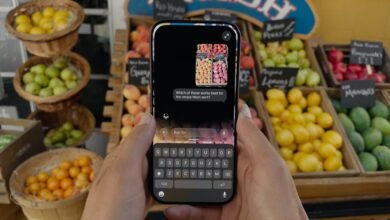
Tap to Pay on iPhone turns a shop’s iPhone into a card machine. The merchant opens a supported payment app, keys in the amount and holds the iPhone out to the customer. The customer taps a contactless debit or credit card against it, or an iPhone, Apple Watch or another phone with a digital wallet. The shop doesn’t need a POS terminal or a Bluetooth card reader.
The iPhone reads the payment over NFC. NFC stands for Near Field Communication. It’s the short-range radio that lets two devices swap a small packet of data when they are a few centimetres apart, and it’s the same technology inside a contactless bank card.

The merchant needs an iPhone XS or newer on the latest version of iOS, plus an app from a payment company that supports the feature. Apple says it works with contactless cards on the major networks, including American Express, Mastercard and Visa. Apple’s small print adds that some contactless cards may not be accepted and that transaction limits may apply.
Apple says it doesn’t store card numbers or transaction details on the iPhone or on its own servers. Its footnotes make one exception: payments taken in what Apple calls Store and Forward mode keep an encrypted card number on the iPhone for a short time.
Apple first announced Tap to Pay on iPhone in February 2022, for the US only, with Stripe as the first payment company to offer it.
So if you run a shop in Lima or Buenos Aires and already own an iPhone XS or newer, you can take card payments from today without buying a card machine.
Who runs it in each country
Apple doesn’t sell Tap to Pay to merchants directly. A payment service provider, the company that processes the card payment, has to build the feature into its app. These are the providers live in the eight new countries:
- Argentina: Mercado Pago
- Colombia: SumUp, Symbiotic
- Costa Rica: Geopagos, Symbiotic, Visa Acceptance Solutions
- Dominican Republic: Azul, Visa Acceptance Solutions
- Guatemala: Geopagos, Symbiotic
- Honduras: Geopagos, Symbiotic
- Panama: Geopagos, Symbiotic
- Peru: SumUp
Mercado Pago is the payments business of Mercado Libre, the online marketplace founded in Argentina. SumUp makes card readers and serves more than 4 million businesses in 36 markets, on its own count. Geopagos and Symbiotic build payment technology that banks and payment companies sell under their own brand. Azul is a card payments company in the Dominican Republic. Visa Acceptance Solutions is Visa’s business for merchants.
Apple’s announcement gives no transaction fees for any of the eight countries.
Why Kenya still isn’t on the list
Apple Pay already works in all eight countries. Each one is on Apple’s list of Apple Pay countries, last updated on 9 September 2026. We checked the two lists against each other, and every one of the 59 Tap to Pay markets is also an Apple Pay market.
Apple Pay isn’t available in Kenya. Apple’s list names four African countries for Apple Pay: Egypt, Mauritius, Morocco and South Africa. Kenya would need Apple Pay first, which means Kenyan banks issuing cards that work in Apple Wallet.
We’ve been tracking this all year. Apple brought Tap to Pay to Malaysia in April and to South Africa in May, then Apple Pay went live in Mauritius the same month. Four months on, Kenya is still missing from both of Apple’s lists.
Kenyan merchants can already take a tap on a phone, on Android or through M-PESA. Absa Bank Kenya and Visa launched Absa Mobi Tap in June 2023, which lets a merchant accept contactless cards on an Android phone. In August, Safaricom added a Tap to Pay button to the M-PESA Business App. That one moves money from the customer’s M-PESA wallet to the merchant’s till. The customer taps an NFC phone and enters their M-PESA PIN.
So if you sell from an iPhone in Nairobi, the card machine stays for now. The thing to watch is Apple’s list of Apple Pay countries. On Apple’s record so far, Kenya has to appear there before Tap to Pay on iPhone can follow.



Join the discussion