
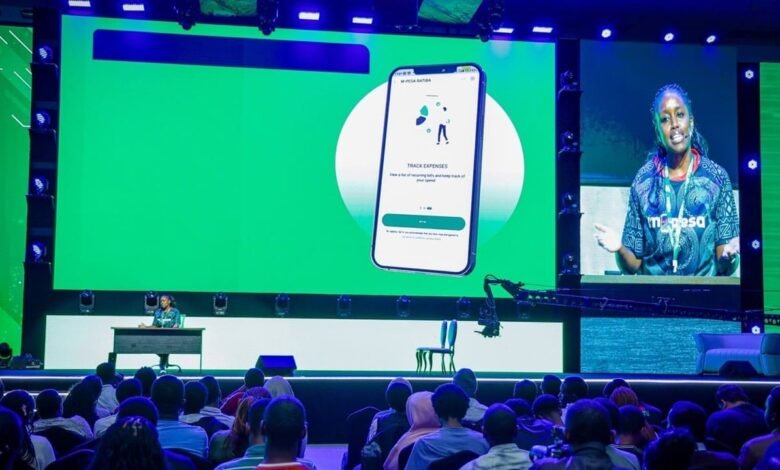
Safaricom’s M-PESA has always evolved in layers.
From simple person-to-person transfers and payments to becoming the backbone of Kenya’s mobile economy, each phase has expanded what mobile money actually means. Now, Vodacom’s FY2026 integrated report points to the next shift: a structured move toward a super app ecosystem, with My OneApp in Kenya acting as the main entry point for M-PESA services.
Across its markets, Vodacom says its financial services platforms, including M-PESA and VodaPay, now host a combined 221 mini apps, serving 9.4 million active financial-services app users. On paper, those are product numbers. In practice, they signal something more fundamental: M-PESA is no longer just a financial tool. It is becoming a platform layer where services sit on top of payments infrastructure, which explains the massive 40% YoY growth.
In FY2026, M-Pesa hosted 221 mini apps across the Group, and we scaled our offering to 9.4 million financial services app users, representing 40% year-on-year growth.

~ Vodacom Group, FY2026 Integrated Report
In Kenya, that experience is already being reorganised under My OneApp, the unified application that merges M-PESA and MySafaricom into a single interface. It is here that the mini app strategy starts to make sense in practical terms.
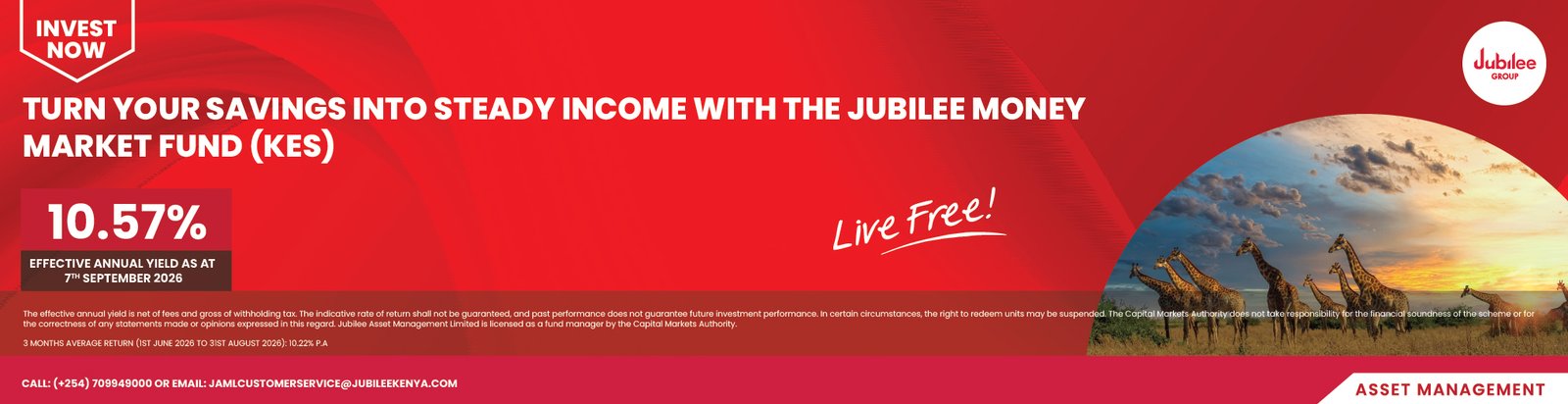
Instead of switching between different apps for services like payments, account management, or partner offerings, users increasingly interact with everything inside one environment. That reduces friction, and more importantly, it keeps users inside the ecosystem. A good example is how you can pay rent on M-PESA to unlock your next loan using the Nesti mini app.
Vodacom frames this as part of a wider “one platform strategy” across Africa, with Safaricom in Kenya playing a central role in shaping how it works at scale. The company reports 103.0 million financial-services customers globally and US$525.6 billion in annual transaction value for FY2026, figures that place M-PESA firmly in the same conversation as major global fintech platforms, not just telecom value-added services.
The introduction of mini apps is what changes the structure of that ecosystem. Rather than building standalone apps that compete for downloads in the app stores, businesses can plug directly into a platform where users already transact daily. That changes distribution, discovery, and engagement all at once.
For Kenya, this shift feels less like disruption and more like consolidation. M-PESA already sits at the centre of daily financial life, from sending money, to paying school fees, to running businesses. My OneApp simply becomes the container that brings those experiences together, while mini apps extend what is possible inside it.
Vodacom is clear that this is not a side experiment. It sits within a long-term ambition to reach 130 million financial-services customers by 2030, signalling that the company sees platforms like My OneApp as core infrastructure for growth.
Financial services play a vital role in enabling participation in the digital economy. Our ecosystem now reaches 103 million customers. From consumers to businesses, payments, savings, e-Commerce, microloans to enterprise financing, these solutions enable economic activity across all segments of society. Reflecting the strength of its impact and the scale of opportunity, we have upgraded our Vision 2030 ambition for financial services customers to 130 million, from 120 million previously.

~ Shameel Joosub, Vodacom Group CEO
What stands out most is how quietly this shift is happening. There is no need for users to learn a new system or change behaviour drastically. Instead, the ecosystem expands around them, bringing more services, more partners, and more functionality all inside the same interface.
With 221 mini apps already live, the transformation is not theoretical anymore. It is already inside My OneApp, quietly reshaping what M-PESA is becoming.






Join the discussion